Step 1: Constructing the Lipid Network (Creaming)
Preheat your oven to 350°F (175°C). Line two large baking sheets with parchment paper. In a large bowl or stand mixer, cream the softened butter, granulated sugar, and brown sugar on medium-high speed for 3–4 minutes. Actionable Tip: Do not rush this. You want the mixture to look pale and fluffy. This mechanical leavening creates the air pockets necessary for a light texture in such a small surface area.Step 2: Emulsification
Add the eggs one at a time, followed by the vanilla extract. Beat well after each addition. Scrape down the sides of the bowl to ensure the hydration is even throughout the batterStep 3: The Dry Integration
Reduce the mixer speed to low. Gradually add the baking soda, salt, and flour. Mix only until no white streaks of flour remain. Critical Technique: Over-mixing activates gluten. For Mini Cookies, we want tenderness, not chewiness akin to bread. Stop mixing the moment the dough forms.Step 4: Divide and Conquer
Divide your dough into three equal parts (approx. 1 ½ cups of dough each).Bowl A (Classic): Fold in the mini chocolate chips.Bowl B (Double Choco): Fold in the cocoa powder and white chocolate chips. You may need to use your hands to knead the cocoa in fully.Bowl C (Funfetti): Gently fold in the rainbow sprinklesStep 5: The Micro-Scoop
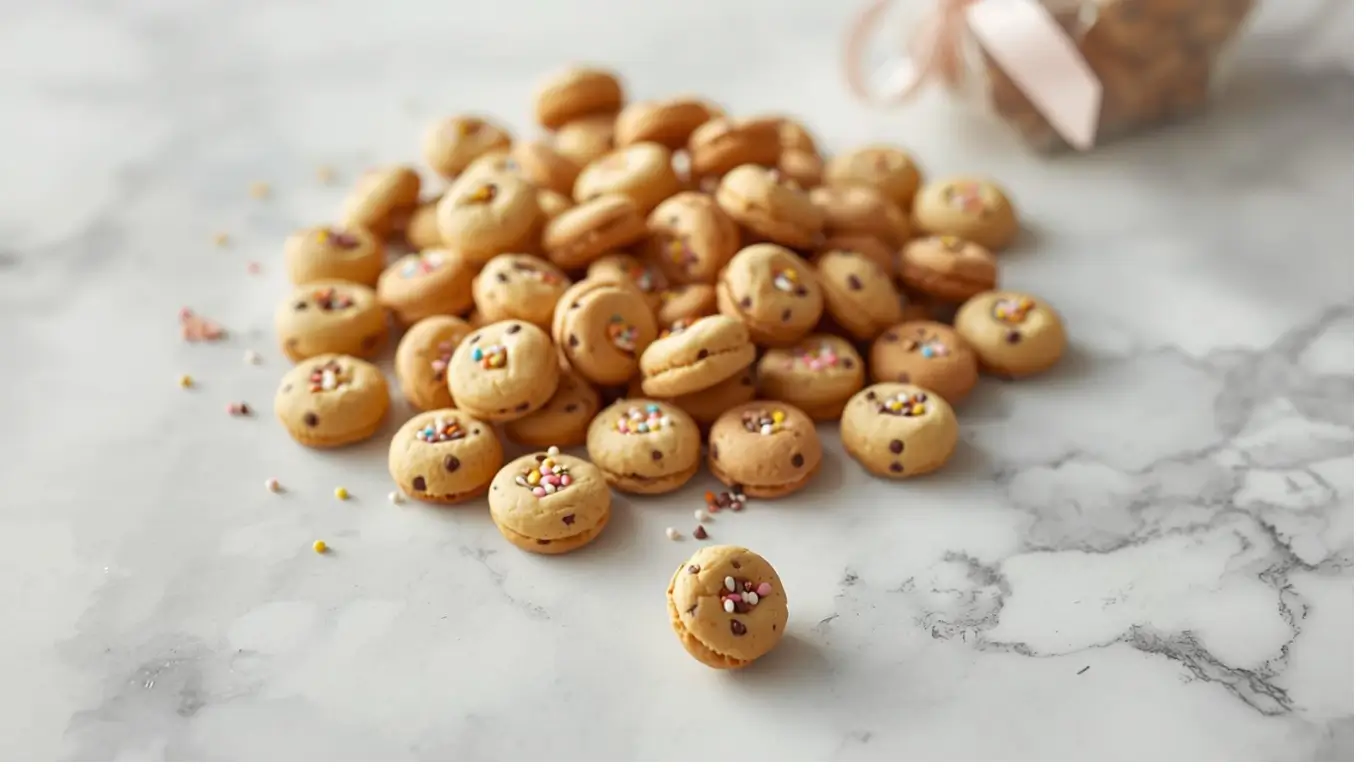
This is the most important step for uniformity. Use a teaspoon or a very small cookie scoop (approx. 1 teaspoon volume) to form dough balls. They should be smaller than a ping-pong ball—think the size of a large marble. Tip: Roll them quickly between your palms for a smooth top.Step 6: The Flash Bake
Place dough balls on the baking sheet about 1.5 inches apart (they will spread). Bake for 6–7 minutes. Visual Cue: They are done when the edges are just barely golden. The centers will look undercooked—that is perfect. They will firm up as they cool.