
The landscape of modern nutrition has undergone a massive shift, with millions of people adopting ketogenic lifestyles to optimize their health, manage blood sugar, and reduce inflammation. However, while cooking a savory keto meal is straightforward, baking low-carb desserts often feels like navigating a minefield. How many times have you attempted to bake low-carb cookies only to end up with a tray of gritty, crumbly discs that taste inexplicably like a sweet omelet, or experienced that dreaded, icy “cooling sensation” at the back of your throat?
Welcome to the definitive masterclass in ketogenic pastry science. This is the absolute only guide you will ever need to master the highly technical art of baking exquisite low-carb cookies. We are moving far beyond the primitive days of simply mashing almond flour and artificial sweeteners together. To achieve true bakery-window perfection—complete with crispy, caramelized edges, dense, chewy centers, and complex butterscotch flavor profiles—you must fundamentally understand the molecular architecture of your alternative ingredients. We will decode the varying hydration capacities of nut and seed flours, the thermodynamic properties of different sugar alcohols, and how to successfully trigger the Maillard browning reaction without a single grain of traditional sucrose. Whether you are managing diabetes, strictly following a keto macro-profile, or simply cutting refined sugars from your diet, this guide will revolutionize your kitchen.
What You Will Learn in This Guide:
- The precise chemical differences between almond flour, coconut flour, and traditional wheat flour, and how their unique fat-to-fiber ratios dictate dough hydration.
- The molecular science of alternative sweeteners: decoding the endothermic cooling effect of erythritol versus the caramelization capabilities of allulose.
- How to engineer a flawless Maillard reaction without sucrose or fructose to achieve deep, roasted flavor profiles.
- Advanced mechanical techniques for creaming keto-friendly fats to achieve perfect structural leavening without gluten.
- A master troubleshooting matrix designed specifically for diagnosing and curing ketogenic baking disasters (including why your nut-free cookies turned green).
- Expert-level storage, freezing, and revitalization protocols to prevent sweetener crystallization and maintain ultimate freshness.
- Direct links to our specialized keto recipe cluster to help you build a stunning, guilt-free cookie tin.
The Science & Fundamentals of Low-Carb Cookies
Traditional baking is applied chemistry that relies heavily on two pillars: gluten (for structural scaffolding) and sucrose (for tenderization, moisture retention, and caramelization). In keto baking, we strip away both of these pillars. To bake professional-quality low-carb cookies, we must rebuild this architecture using advanced nutritional science and highly specialized ingredients.
The Anatomy of Nut Flours: Almond vs. Coconut
When we eliminate wheat flour, we lose the starch that absorbs water and the gluten that provides elasticity. We replace it with nut and seed flours, which behave entirely differently on a molecular level.
- Blanched Almond Flour: The gold standard for keto baking. Almond flour is incredibly dense, consisting of roughly 50% fat and 20% protein. Because it lacks complex carbohydrates, it does not absorb liquid the way wheat flour does. It provides an incredibly tender, rich crumb, but its high fat content means it is prone to making cookies greasy if the fat from the butter is not carefully balanced.
- Coconut Flour (The Sponge): Coconut flour is a notoriously difficult ingredient, yet brilliant when understood. It is essentially pure, dehydrated dietary fiber. It is extremely hygroscopic, meaning it will aggressively absorb up to four times its weight in liquid. You cannot swap almond flour for coconut flour in a 1:1 ratio; doing so will result in a cookie as dry as the Sahara desert. Professional keto bakers often use a carefully calculated ratio (typically 3 parts almond flour to 1 part coconut flour) to balance moisture and structure.
The Sweetener Conundrum: Sugar Alcohols, Epimers, and Extracts
Sucrose (table sugar) does much more than make a cookie sweet; it liquefies when heated, contributing to spread, and recrystallizes as it cools, creating a crispy edge. Low-carb sweeteners behave very differently under thermodynamic stress.
- Erythritol: A sugar alcohol that provides about 70% of the sweetness of sugar with virtually zero net carbs. However, erythritol has a strong endothermic reaction when it dissolves in saliva, absorbing heat and creating a distinct “minty” or cooling sensation in the mouth. Furthermore, erythritol does not melt and stay melted like sugar; it rapidly recrystallizes as the cookie cools. This makes it excellent for crunchy shortbread, but terrible for soft, chewy cookies.
- Allulose (The Holy Grail): Allulose is a “rare sugar” and an epimer of fructose. It passes through the body without being metabolized, yielding almost zero calories or net carbs. Because its molecular structure is so similar to real sugar, it actually caramelizes, browns, and retains moisture, resulting in a perfectly soft, chewy cookie. It has no cooling effect, but it is only 70% as sweet as sucrose.
- Monk Fruit and Stevia: These are high-intensity botanical extracts (up to 300 times sweeter than sugar). They provide zero bulk or structure to the dough. They are best used in liquid drop form to boost the sweetness of an allulose or erythritol-based dough without adding extra crystalline bulk.
Re-engineering the Maillard Reaction Without Sugar
The Maillard reaction is the complex browning process between amino acids (proteins) and reducing sugars that gives traditional cookies their deep, roasted, butterscotch flavors.
- The Keto Deficit: Because erythritol is not a reducing sugar, cookies baked entirely with erythritol will emerge from the oven looking pale and ghostly, lacking depth of flavor.
- The Fix: To force a Maillard reaction in a low-carb cookie, you must introduce a reducing sugar alternative (like allulose) alongside proteins. Ensuring your recipe utilizes grass-fed butter (which contains browning milk solids) and an egg yolk will provide the necessary amino acids. Additionally, slightly raising the pH of the dough with a pinch of baking soda accelerates browning, ensuring your keto cookies look just as golden and appetizing as bakery classics.
Binding Without Gluten
Without the viscoelastic network of gluten, low-carb cookies are inherently fragile and prone to crumbling into dust.
- Xanthan Gum: This hydrocolloid is non-negotiable in keto baking. It forms a powerful gel when hydrated, acting as a molecular glue that holds the dense almond and coconut fibers together. It provides the crucial “chew” that keto flours lack.
- Egg Proteins: Eggs do double duty in keto baking, providing both hydration (for the coconut flour) and structural coagulation (from the egg whites). However, using too many eggs to combat dryness will result in a spongy, cakey texture that tastes like breakfast food rather than dessert.
Essential Equipment & Ingredients
Precision is the great equalizer in keto baking. Because we are manipulating the delicate balance of high-fat flours and zero-carb hydrocolloids, using the correct tools and premium ingredients will drastically elevate your success rate and prevent expensive baking failures.
The Non-Negotiable Tools
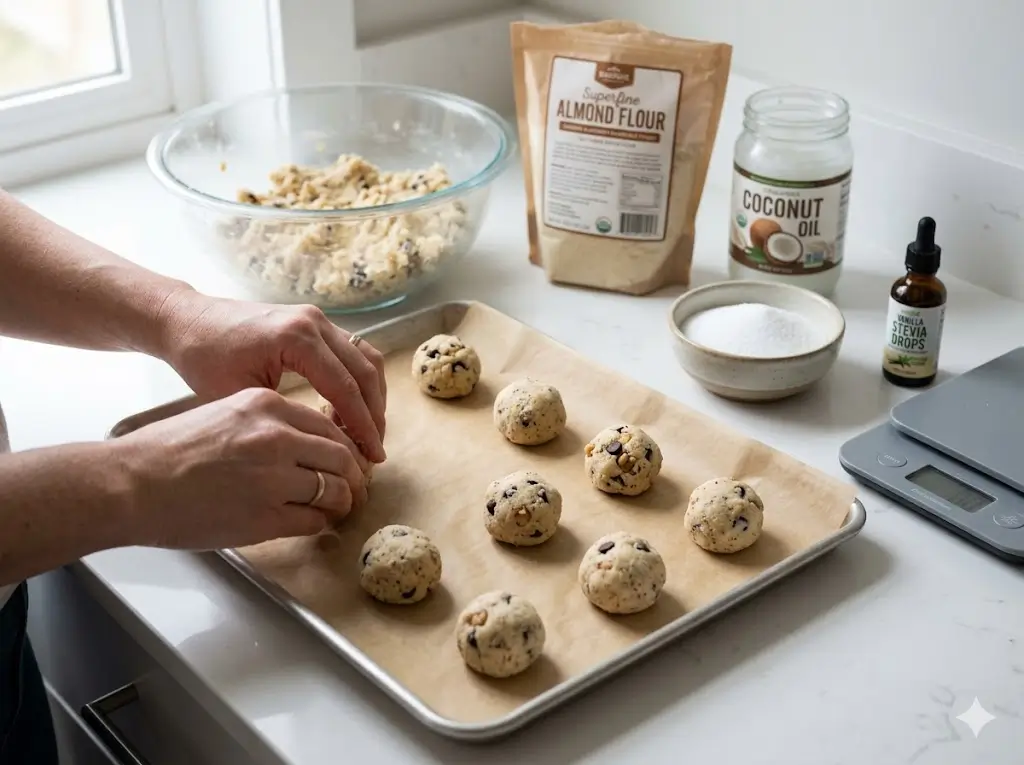
- High-Precision Digital Kitchen Scale: Volumetric measurements (cups) are the ultimate enemy of low-carb baking consistency. One cup of almond flour can vary by up to 40 grams depending on the brand’s milling process and how tightly you packed it. When dealing with coconut flour, being off by just 10 grams will completely ruin the dough’s hydration curve. A digital scale guarantees exact science every single time.
- Heavy-Gauge, Light-Colored Aluminum Baking Sheets: Keto doughs, particularly those relying on almond flour and allulose, are highly sensitive to radiant heat and can burn quickly. Dark, non-stick baking pans absorb too much radiant oven heat, causing the bottoms of your cookies to scorch. Thick aluminum ensures gentle, even heat distribution.
- Silicone Baking Mats (Silpat): Because keto cookies lack the structural integrity of caramelized sucrose, they are incredibly sticky and fragile when hot. Using parchment paper can sometimes result in sticking, whereas a high-quality silicone mat ensures a flawless release once the cookies have cooled.
Decoding Ingredient Quality
- Superfine Blanched Almond Flour: Never substitute “almond meal” for almond flour. Almond meal includes the dark skins of the almonds and is milled coarsely, resulting in a gritty, heavy, and speckled cookie. You must source “superfine blanched” almond flour, where the skins are removed, and the nuts are pulverized into a soft, flour-like powder.
- European Grass-Fed Butter: Because fat is the primary macro-nutrient driving flavor in keto baking, the quality of your butter is paramount. European-style grass-fed butters (like Kerrygold) have a higher butterfat percentage (82%) and contain more vibrant, complex flavor compounds derived from the cows’ grass diet, which helps mask the sometimes overpowering flavor of almond flour.
- Pure Vanilla Extract (Never Essence): Imitation vanilla essence relies on synthetic vanillin and will expose the lack of real sugar with a harsh, chemical aftertaste. Pure vanilla extract contains hundreds of organic flavor compounds that bridge the gap, amplifying the richness of the dough and tricking the palate into perceiving enhanced sweetness.
The Recipe Cluster Highlights
To demonstrate the incredible versatility of low-carb baking science, we have developed four highly specialized master recipes. Choose your ideal texture and flavor profile below.
The Ultimate Keto Chocolate Chip Cookies
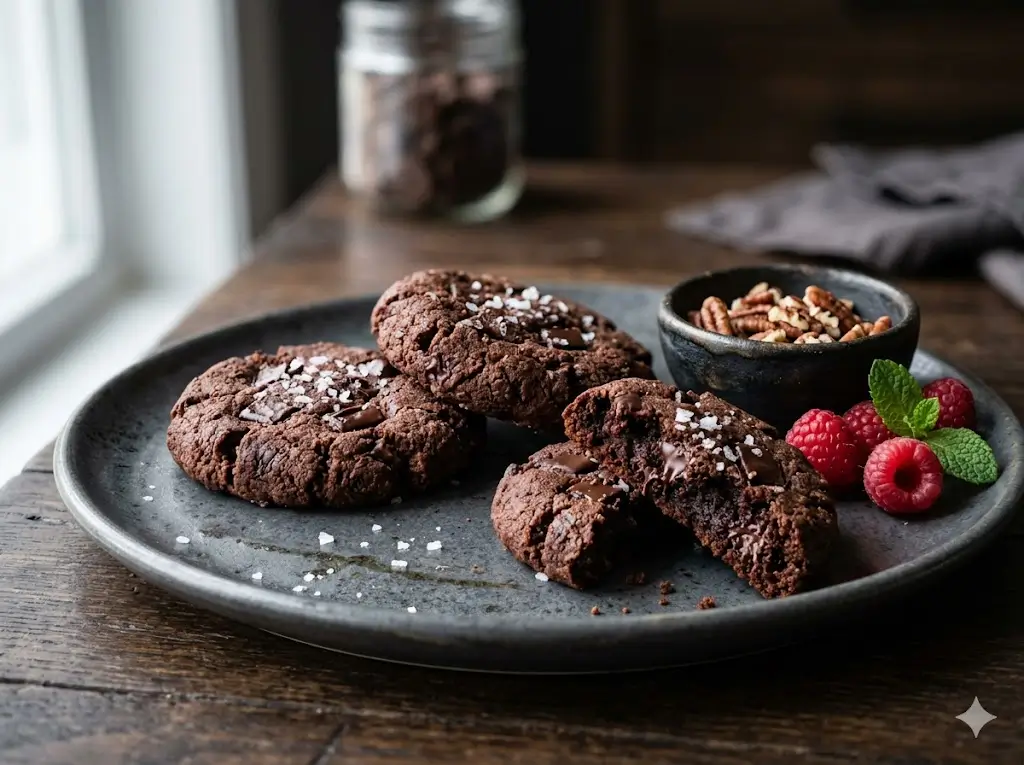
The holy grail of low-carb baking. By utilizing a specific blend of allulose (for chewiness and caramelization) and a touch of monk fruit (for sweetness), combined with superfine almond flour and xanthan gum, these cookies are virtually indistinguishable from their high-carb counterparts. We utilize browned butter to deepen the flavor profile and mandate a 30-minute chill to allow the flours to hydrate. Studded with sugar-free dark chocolate chips, this is a 2-net-carb masterpiece. [Link to Full Recipe: Keto Chocolate Chip Cookies]
Sugar-Free Pecan Sandies
For those who crave the delicate, crumbly, melt-in-your-mouth texture of a classic shortbread. This recipe explicitly leverages the crystallizing properties of erythritol. Because erythritol hardens as it cools, it provides the requisite “snap” that defines a perfect pecan sandy. Rich with toasted pecans, high-fat butter, and a hint of cinnamon, these cookies are exceptionally low in carbs and pair perfectly with a hot cup of black coffee. [Link to Full Recipe: Sugar-Free Pecan Sandies]
Low-Carb Peanut Butter Cookies
A flourless wonder that relies entirely on the natural protein and fat architecture of the peanut. By skipping the almond and coconut flours altogether, we avoid graininess. Using only natural, unsweetened peanut butter, an egg, and a powdered erythritol/monk fruit blend, this dough comes together in one bowl. Beaten vigorously to incorporate air, these cookies emerge deeply savory, sweet, and unbelievably tender. [Link to Full Recipe: Low-Carb Peanut Butter Cookies]
Keto White Chocolate Macadamia Nut Cookies
A luxurious, high-fat indulgence. Macadamia nuts are the king of keto nuts, boasting an incredible fat-to-carb ratio. We pair them with sugar-free white chocolate chips and a dough base that incorporates a tiny amount of coconut flour to ensure the cookies stay thick and pillowy rather than spreading into thin wafers. A dash of pure almond extract elevates the flavor profile into gourmet bakery territory. [Link to Full Recipe: Keto Macadamia Nut Cookies]
Step-by-Step Master Techniques for Keto Cookies
Executing a low-carb recipe requires an appreciation for the unique, often stubborn behaviors of alternative ingredients. Master these targeted techniques to ensure flawless execution.
1. Creaming Alternative Sweeteners
In traditional baking, sharp sugar crystals slice into butter, creating microscopic air pockets for leavening. Keto sweeteners do not behave this way.
- The Solubility Issue: Erythritol is highly resistant to dissolving in fat. If you cream standard granular erythritol with butter, your cookies will likely have a gritty texture.
- The Pro Fix: You must always powder your sweetener. If you only have granular erythritol or allulose, run it through a high-speed blender or spice grinder for 30 seconds until it resembles confectioner’s sugar. This ensures a perfectly smooth mouthfeel and allows the sweetener to integrate seamlessly with the butter during the creaming phase.
2. The Mandatory Hydration Rest
Nut flours and fiber-heavy coconut flour do not absorb moisture instantly like wheat flour does.
- The Wait: If you mix a keto cookie dough and bake it immediately, the moisture from the eggs and butter will sit on the outside of the almond flour particles, resulting in a cookie that is greasy on the outside and dry on the inside.
- The Technique: You must wrap the bowl tightly in plastic wrap and let the dough rest in the refrigerator for a minimum of 30 minutes (up to 24 hours). This “autolyse” period allows the soluble fibers in the coconut flour and the fats in the almond flour to fully hydrate, creating a cohesive, firm, and scoopable dough.
3. Engineering the Spread
Without sucrose to melt and spread, low-carb cookies often stubbornly remain exactly in the shape you scooped them.
- The Physical Press: If a recipe utilizes primarily erythritol and almond flour, the dough will not spread in the oven. You must use the palm of your hand or the bottom of a slightly damp glass to press the dough balls down to your desired final thickness (usually about 1/2 inch) before baking.
- Using Allulose for Natural Spread: If you desire a cookie that naturally spreads and forms crinkly, crispy edges, your recipe must utilize allulose. Because it behaves like fructose, it melts and spreads under heat, requiring less manual shaping.
Pro Baker Secret: Never touch a hot keto cookie. Because they lack gluten and crystallized sugar, low-carb cookies are incredibly fragile straight out of the oven. They will literally fall apart in your hands. You must allow them to cool completely on the baking sheet for at least 15 minutes. As the fats solidify and the sweeteners reset, the cookie will gain its structural integrity.
The Ultimate Troubleshooting Guide
Even with precision, anomalies happen in the keto kitchen. Keep this highly technical diagnostic matrix handy to rescue your low-carb bakes from disaster.
| The Symptom | The Scientific Cause | The Expert Fix |
|---|---|---|
| Cookies have a distinct, icy “cooling” sensation in the mouth. | The recipe relies entirely on high concentrations of erythritol. | Substitute 50% to 100% of the erythritol with allulose, or use a monk fruit/erythritol blend to reduce the overall volume of sugar alcohols required. |
| Cookies are extremely dry, crumbly, and choke-inducing. | Too much coconut flour was used, or the dough lacked a hydrocolloid binder. | Weigh your coconut flour precisely (1 tbsp is exactly 7g). Ensure the recipe includes 1/4 to 1/2 tsp of xanthan gum to provide elastic chewiness. |
| Cookies spread into greasy, flat, burnt puddles. | The butter was too warm when creamed, or the ratio of almond flour to liquid was too low. | Ensure your butter is cool to the touch (65°F) before creaming. Mandate a 30-minute dough chill in the refrigerator to solidify the fats before baking. |
| Cookies remained in tall, tight balls and did not spread. | Lack of allulose, or the oven temperature was too high, setting the exterior before the interior could relax. | Physically press the dough balls down to 1/2-inch thickness before baking. Ensure your oven is accurately calibrated to 350°F (175°C). |
| Cookies taste like a sweet, cakey omelet. | Over-reliance on eggs to bind the dense nut flours. | Reduce the egg content. If the dough needs moisture, add a tablespoon of heavy cream or unsweetened almond milk instead of another egg. |
| Nut-free cookies (using sunflower seed flour) turned green! | Chlorophyll in the sunflower seeds reacts with the alkaline baking soda. | This is harmless but visually unappealing. Add an acid, such as 1 tsp of lemon juice or 1/2 tsp of cream of tartar, to the dough to neutralize the pH and prevent the green reaction. |
Dietary Adaptations & Substitutions
The ketogenic diet often intersects with other dietary requirements. Here is how to modify the master low-carb concepts for other specific needs without sacrificing the integrity of the bake.
Dairy-Free Keto Baking
Many keto bakers also avoid dairy to minimize inflammation or due to lactose intolerance.
- The Butter Swap: You can replace grass-fed butter with refined coconut oil or a high-quality vegan block butter (like Miyoko’s). However, because coconut oil is 100% fat (butter has 20% water), the dough will lack the moisture needed for steam leavening. Add 1 tablespoon of unsweetened almond milk to the dough to restore the hydration balance.
- The Chocolate: Ensure your sugar-free chocolate chips do not contain milk powder. Brands like Lily’s Sweets or ChocZero offer excellent dairy-free, keto-friendly options.
Nut-Free Keto Baking
For those with severe tree nut allergies, almond flour is out of the question.
- The Sunflower Seed Solution: Sunflower seed flour is an excellent 1:1 substitute for almond flour in terms of fat and protein macros. However, as noted in our troubleshooting guide, you must add an acidic element (like cream of tartar or a splash of apple cider vinegar) to the dough. If you omit the acid, the chlorophyll in the seeds will react with the baking soda and turn your cookies a vibrant shade of green as they cool!
Advanced Storage & Make-Ahead Strategies
A perfect low-carb cookie behaves differently over time compared to a wheat-based cookie. Knowing how to preserve the crumb structure and prevent sweetener crystallization is vital for extending the lifespan of your bakes.
Freezing Cookie Dough (The Superior Method)
The absolute best way to ensure you always have incredible keto cookies on hand is to freeze the dough, not the baked cookies.
- Scoop the freshly made, hydrated dough into balls (and flatten them slightly if the recipe requires it).
- Place them closely together on a baking sheet and flash-freeze for 2 hours until rock solid.
- Transfer the frozen pucks to an airtight heavy-duty zip-top freezer bag, squeezing out all the air.
- Shelf Life: Up to 3 months.
- Baking from Frozen: Do not thaw! Place the frozen dough directly onto a baking sheet. Lower your oven temperature by 15°F and add 2 to 4 minutes to the total baking time. This method yields a superior, thicker cookie.
Storing Baked Keto Cookies
The type of sweetener you use dictates how the cookie must be stored.
- Erythritol-Based Cookies: These will become harder and crunchier over time as the erythritol continually crystallizes. Store them in an airtight container at room temperature. They will last for 5 to 7 days.
- Allulose-Based Cookies: Allulose attracts moisture from the air. Cookies baked with allulose will actually become softer and stickier the next day. Store them in a container with a slightly loose lid to prevent them from becoming too soggy, or layer them between sheets of parchment paper.
Reviving Stale Keto Cookies
If your low-carb cookies have become excessively hard (usually due to erythritol crystallization), you can briefly re-melt the sweetener. Place the cookie in the microwave for exactly 8 to 10 seconds. The brief blast of heat will relax the crystalline structure and slightly melt the butter, returning the cookie to a warm, pliable, straight-out-of-the-oven state. Consume immediately.
Conclusion
Mastering low-carb cookies is a magnificent triumph of nutritional biochemistry and culinary dedication. By understanding the unique hydration demands of almond and coconut flours, respecting the thermodynamic properties of advanced sweeteners like allulose and erythritol, and utilizing hydrocolloids like xanthan gum to replace the structural scaffolding of gluten, you can completely redefine what is possible on a ketogenic diet. You no longer have to settle for gritty, cooling, or crumbly dessert substitutes; you can engineer bakery-quality masterpieces that align perfectly with your macronutrient goals.
Now it is your turn to preheat the oven. We invite you to explore our highly specialized cluster recipes linked above, choose your favorite flavor profile, and put these scientific techniques to the test. Did powdering your sweetener change the texture of your dough? Have you experienced the magic of allulose caramelization? Leave a comment below, share your photos with our keto baking community, and be sure to subscribe to our newsletter for more deep dives into low-carb pastry science!
Comprehensive FAQs about Low-Carb Cookie Baking
1. Why do my keto cookies always taste a little bit like scrambled eggs?
This is a very common issue known as “the omelet effect.” It happens when a recipe tries to compensate for the lack of gluten and moisture by over-indexing on eggs. If a recipe calls for more than 2 eggs for a single batch of cookies, proceed with caution. Ensure you are using enough high-quality vanilla extract and adequate salt to mask the sulfurous notes of the egg whites.
2. Can I substitute almond flour for coconut flour in a recipe?
Absolutely not. This is the cardinal sin of keto baking. Coconut flour is pure, dehydrated fiber that absorbs four times as much liquid as almond flour. If you swap 1 cup of almond flour for 1 cup of coconut flour, your dough will turn into a dry, choking powder. If you must convert a recipe, the general rule is to use 1/4 cup of coconut flour for every 1 cup of almond flour, and you usually have to add an extra egg or more liquid.
3. Why did my low-carb cookies turn green overnight?
If you used sunflower seed flour (or sometimes certain brands of pumpkin seed protein) instead of almond flour, you experienced a chemical reaction. The chlorogenic acid in the seeds reacts with the alkaline baking soda when heated, oxidizing and turning the baked good green. It is completely safe to eat, but to prevent it, add 1 teaspoon of lemon juice or apple cider vinegar to the dough to lower the pH.
4. What is the difference between erythritol, Swerve, and Lakanto?
Erythritol is the base chemical name of the sugar alcohol. Swerve is a brand name for a sweetener blend that is primarily erythritol mixed with oligosaccharides (prebiotic fiber) to help it measure cup-for-cup like sugar. Lakanto is a brand name for a blend of erythritol and monk fruit extract, designed to offset the cooling effect of pure erythritol with the intense sweetness of monk fruit.
5. Why are my keto cookies so crumbly when I take them out of the oven?
Keto cookies do not contain gluten (which acts as a stretchy net) or melted sucrose (which hardens like glass as it cools). When hot, the butter and nut oils are liquid, meaning the cookie has virtually zero structural integrity. You must leave them on the baking sheet to cool undisturbed for at least 15 to 20 minutes before attempting to move them with a spatula.
6. Do I really need to use xanthan gum?
What if I skip it? If you are making a delicate shortbread or a dense peanut butter cookie, you might get away without it. However, if you are making a chewy chocolate chip or oatmeal-style keto cookie, skipping xanthan gum will result in a cookie that lacks “chew” and easily crumbles into a pile of nut dust when you bite into it. It acts as the vital glue.
7. Can I use liquid stevia drops instead of granular sweetener?
No, not as a direct replacement. Granular sweeteners (like erythritol or allulose) provide bulk and structure to the cookie dough, making up a significant portion of the dry ingredients. If you replace 1 cup of granular sweetener with a few drops of liquid stevia, you have removed a massive amount of physical mass from the recipe, and the dough will be a wet, soupy mess. Liquid stevia should only be used to boost the sweetness, not provide structure.
8. Is allulose safe for a strict keto diet?
Yes. Allulose is a rare sugar that the human body cannot metabolize for energy. It passes through the digestive system mostly intact, meaning it does not spike blood glucose or insulin levels, and it contributes virtually zero net carbohydrates. It is widely considered one of the best sweeteners for a strict ketogenic lifestyle.
9. Why did my keto cookies spread into one giant, flat pan-cookie?
Spread is dictated by the melting point of the fats and the hydration of the flours. If your butter was too warm when you creamed it, or if you skipped the mandatory 30-minute dough chilling phase, the butter melted instantly in the oven before the egg proteins could coagulate and set the structure. Always bake cold dough!
10. How do I calculate the net carbs for these cookies?
To calculate net carbs, you take the Total Carbohydrates and subtract the Dietary Fiber and the Sugar Alcohols (like erythritol). Note: If you are using Allulose, it will often be listed under total carbohydrates on the nutrition label, but it should also be subtracted entirely, just like fiber or sugar alcohols, to find your true net carb impact.