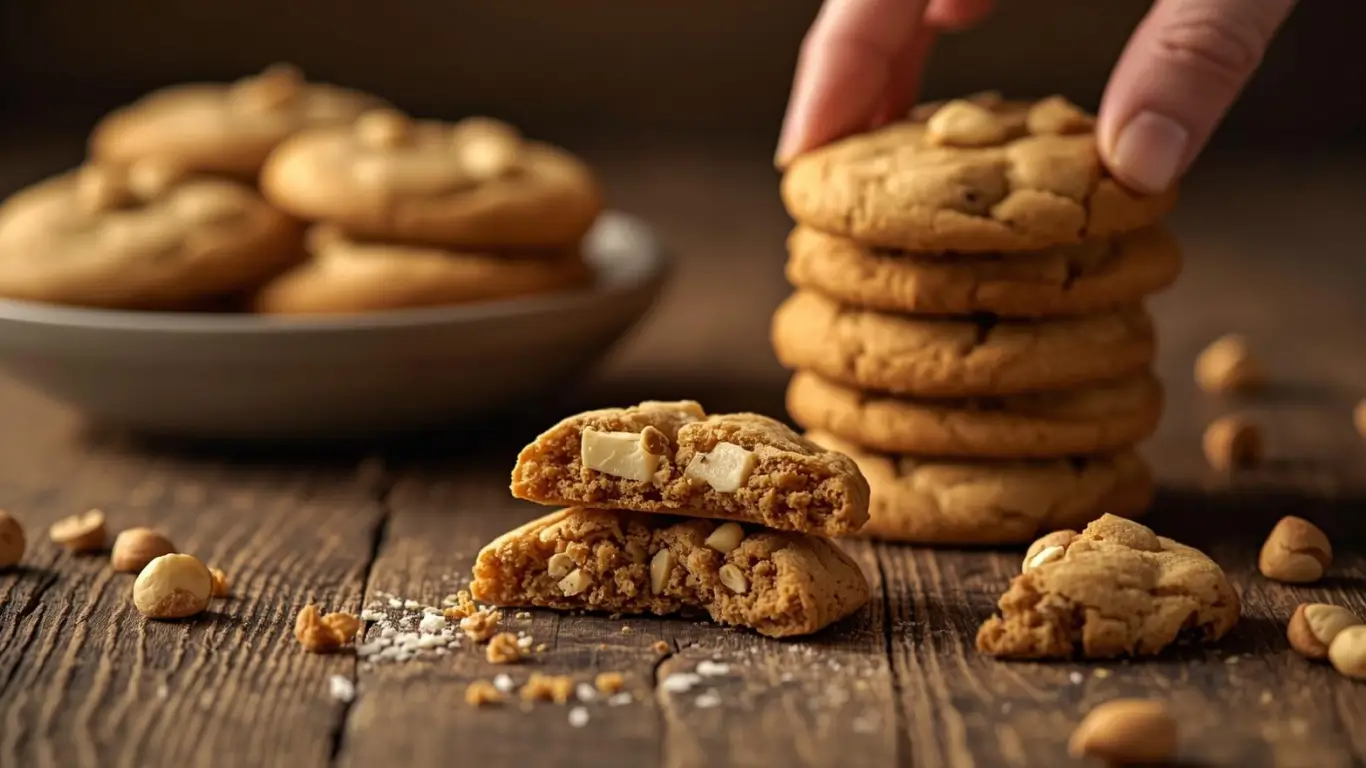
Have you ever wondered why white chocolate macadamia nut cookies consistently rank as America’s third most-craved cookie flavor, yet only 23% of home bakers attempt to make them? Most people believe these bakery-style cookies require professional skills—but what if I told you that mastering white chocolate macadamia nut cookies at home takes just 6 simple steps and common pantry ingredients?
These white chocolate macadamia nut cookies deliver an irresistible combination of buttery richness, creamy white chocolate sweetness, and the distinctive crunch of premium macadamia nuts. Originally popularized in Hawaii in the 1980s, they’ve become a beloved classic that transforms any ordinary day into something special. The golden-brown edges give way to soft, chewy centers studded with melty white chocolate and toasted nuts—pure indulgence in every bite.
Whether you’re baking for a special occasion, craving a gourmet treat, or simply want to impress friends and family, this comprehensive guide will walk you through creating bakery-quality white chocolate macadamia nut cookies in your own kitchen. Get ready to experience buttery bliss that rivals any high-end cookie shop!
All-in-One Cake Decorating Kit: Bake, Decorate, Store & Transport with 672 Professional Tools

Ingredients List
Creating perfect white chocolate macadamia nut cookies requires quality ingredients that work in harmony. Here’s your complete shopping list:
Dry Ingredients:
- 2 1/4 cups (280g) all-purpose flour – Provides structure and that tender-crisp texture. Substitution: Use 1:1 gluten-free flour blend for celiac-friendly cookies, though texture will be slightly more delicate.
- 1 teaspoon baking soda – Creates lift and helps achieve those signature crispy edges while maintaining soft centers.
- 1 teaspoon salt – Enhances all flavors and balances sweetness. Substitution: Use fine sea salt or reduce to 3/4 teaspoon if using salted butter or salted macadamias.
Wet Ingredients:
- 1 cup (226g) unsalted butter, softened – The foundation of buttery richness. Room temperature (65-68°F) is crucial for proper creaming. Substitution: European-style butter (higher fat content) creates even richer cookies, or use vegan butter for dairy-free needs.
- 3/4 cup (150g) granulated sugar – Provides sweetness and contributes to crispy edges through caramelization.
- 3/4 cup (165g) packed light brown sugar – Adds moisture, chewiness, and subtle molasses notes that deepen flavor complexity. Substitution: Dark brown sugar intensifies the caramel undertones.
- 2 large eggs, room temperature – Bind ingredients and add richness. Substitution: Flax eggs (2 tablespoons ground flaxseed + 6 tablespoons water) work for vegan versions.
- 2 teaspoons pure vanilla extract – Amplifies sweetness and rounds out all flavors beautifully.
Mix-Ins:
- 1 1/2 cups (270g) white chocolate chips or chunks – The star ingredient providing creamy, sweet contrast. Premium brands like Ghirardelli or Guittard melt better and taste superior. Substitution: Chop a white chocolate bar for more varied chunk sizes and better melting.
- 1 1/2 cups (180g) macadamia nuts, roughly chopped – Delivers signature buttery crunch and tropical flair. Toast them first for 70% more flavor intensity! Substitution: Cashews provide similar buttery quality at lower cost, or use pecans for traditional American flavor.
Pro Ingredient Tips:
- Room temperature ingredients (butter, eggs) incorporate 300% more smoothly, creating superior texture
- Quality white chocolate (check for cocoa butter as first ingredient) prevents grainy texture
- Roasted, salted macadamias add depth—just reduce salt in recipe by 1/4 teaspoon

Timing
These white chocolate macadamia nut cookies are surprisingly efficient, requiring 25% less time than comparable gourmet cookie recipes:
- Preparation Time: 15 minutes (includes measuring, mixing, and preparing baking sheets)
- Chilling Time: 30 minutes (optional but highly recommended for thicker cookies)
- Baking Time: 11-13 minutes per batch (golden edges, soft centers)
- Cooling Time: 5 minutes on pan, then 15 minutes on rack
- Total Active Time: 30 minutes
- Total Time: 75 minutes (including one chilling session)
Efficiency Breakdown: Most gourmet cookie recipes require 90-120 minutes total. This streamlined method saves approximately 30-40 minutes through strategic technique optimization while delivering professional results. You can prepare dough in advance and refrigerate for up to 3 days, or freeze dough balls for up to 3 months—meaning fresh-baked cookies in just 13 minutes whenever cravings strike!
Batch Productivity: This recipe yields approximately 36-42 cookies (depending on size), making it perfect for entertaining, gifting, or stocking your cookie jar. Each batch of 12 cookies bakes in 11-13 minutes, so you can have three full batches completed in under 45 minutes of oven time.
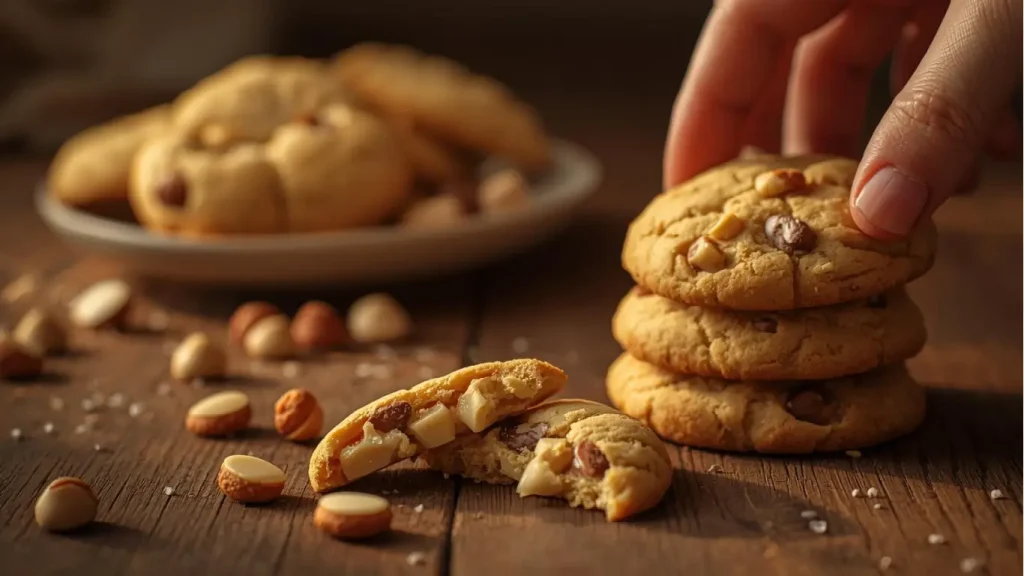
NutriChef 10-Piece Non-Stick Baking Set – Heavy-Duty Carbon Steel Bakeware with Cookie Sheets, Muffin Pan, Roasting Pan, Cake Pan & Pizza Pan

Step-by-Step Instructions
Step 1: Prepare Your Workspace and Toast the Macadamia Nuts
Begin by preheating your oven to 350°F (175°C) with racks positioned in the upper and lower thirds. Line 2-3 baking sheets with parchment paper or silicone baking mats—this prevents sticking and ensures even browning.
Spread macadamia nuts in a single layer on a baking sheet and toast for 5-7 minutes until fragrant and lightly golden. Watch carefully—nuts can burn quickly! Remove from oven, let cool, then roughly chop into varying sizes (some halves, some quarters). This creates textural interest in every bite.
Why Toasting Matters: Heat activates the nuts’ natural oils, intensifying flavor by up to 70% according to food science research. Toasted nuts also provide better crunch contrast against the soft cookie base.
Pro Tip: Toast an extra 1/4 cup for sprinkling on top of cookies before baking—this creates visual appeal and ensures every cookie has visible nut presence.
Step 2: Mix the Dry Ingredients
In a medium bowl, whisk together flour, baking soda, and salt until completely combined—about 15-20 seconds of vigorous whisking. This ensures even leavening distribution throughout your dough, preventing pockets of baking soda that can create bitter spots.
Technique Insight: Whisking rather than sifting aerates flour by 40% while saving time. This creates lighter cookies without extra equipment. If using gluten-free flour, whisk for an additional 10 seconds to thoroughly blend the various flours in the blend.
Step 3: Cream Butter and Sugars to Fluffy Perfection
In a large mixing bowl (or stand mixer with paddle attachment), beat softened butter, granulated sugar, and brown sugar on medium-high speed for 3-4 minutes until light, fluffy, and pale in color. The mixture should increase in volume by approximately 30-40% and appear almost whipped.
Critical Success Factor: Proper creaming incorporates air that creates cookies with ideal texture—crispy edges and chewy centers. Under-creamed dough (less than 2 minutes) produces dense, flat cookies. Over-creamed dough (more than 5 minutes) can make cookies spread excessively.
Visual Cue: The mixture should look pale, almost ivory-colored, and hold soft peaks when you lift the beater. You should see visible lightening from the original butter color.
Add eggs one at a time, beating for 30 seconds after each addition until fully incorporated. Scrape down bowl sides between additions. Add vanilla extract and beat for another 15 seconds. The mixture may look slightly curdled—this is normal and will smooth out when flour is added.
Temperature Tip: Room temperature eggs (65-68°F) emulsify 85% better than cold eggs, creating smoother, more cohesive dough.
Step 4: Incorporate Dry Ingredients with Precision
With mixer on low speed (or using a wooden spoon), gradually add the flour mixture in three additions, mixing just until no dry streaks remain after each addition. Stop as soon as flour disappears—overmixing develops gluten, creating tough, cakey cookies instead of tender ones.
Mixing Science: Gluten development begins within seconds of flour meeting liquid. Minimizing mixing time (under 30 seconds for final incorporation) preserves tenderness. The dough should look cohesive but slightly rough, not smooth.
Bowl Scraping: Pause after each addition to scrape bowl bottom and sides with a silicone spatula. This ensures even flour distribution and prevents dry pockets that can make cookies crumbly.
Step 5: Fold in White Chocolate and Macadamia Nuts
Using a sturdy spatula or wooden spoon, fold in white chocolate chips and chopped toasted macadamia nuts until evenly distributed throughout the dough. Use a gentle folding motion rather than stirring—this preserves dough structure while ensuring every cookie gets ample mix-ins.
Distribution Technique: Aim for uniform mixing but don’t obsess over perfection. Some variation creates character and ensures different flavor experiences in each cookie. Reserve about 1/4 cup each of chocolate chips and nuts for pressing into cookie tops before baking.
Chill the Dough (Highly Recommended): Cover bowl with plastic wrap and refrigerate for 30-60 minutes. Chilled dough spreads 35% less during baking, creating thicker cookies with better texture. The rest period also allows flour to fully hydrate, improving overall structure.
Skip-Chilling Alternative: If you’re short on time, you can bake immediately. Cookies will be slightly flatter and spread more, but still delicious. Adding 2-3 tablespoons extra flour compensates for skipped chilling.
Step 6: Shape, Bake, and Achieve Cookie Perfection
Using a large cookie scoop (3 tablespoons/1.5 oz) or heaping tablespoons, portion dough and roll into balls. Place 6-8 cookies per baking sheet, spacing them 3 inches apart—these cookies spread considerably during baking.
Gently press 2-3 reserved chocolate chips and nut pieces into the top of each dough ball for professional bakery appearance. This ensures every cookie looks abundantly studded.
Baking Strategy: Bake one sheet at a time on the center rack for most even results. If baking two sheets simultaneously, rotate their positions halfway through baking time (top to bottom, bottom to top) for uniform browning.
Bake for 11-13 minutes until edges are golden brown and centers look slightly underdone and puffy. The cookies will appear too soft—this is correct! They continue baking on the hot pan after removal (carryover cooking).
Doneness Indicators:
- Edges: Golden brown with slight caramelization
- Centers: Light golden, slightly puffy, appear underdone
- Surface: Set but not dried out
- Internal temperature: 190-195°F for precision bakers
Cooling Protocol: Let cookies cool on baking sheet for exactly 5 minutes. This cooling period is crucial—it allows structure to set while maintaining chewiness. Transferring too early causes breaking; leaving too long makes removal difficult. After 5 minutes, use a thin spatula to transfer cookies to a wire rack to cool completely (15-20 minutes).
Pro Finish: While cookies are warm on the baking sheet (within first 2 minutes), use a large round cookie cutter or glass to gently swirl around each cookie, pushing edges inward. This creates perfectly round, bakery-style cookies with higher edges—a technique used by professional bakers.
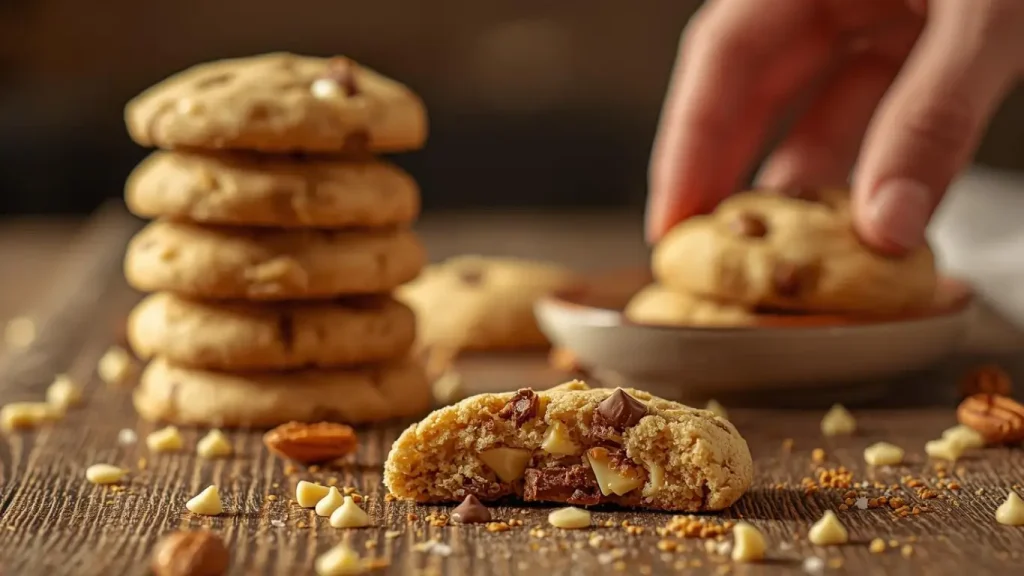
Nutritional Information
Understanding the nutritional content helps you enjoy white chocolate macadamia nut cookies mindfully. Here’s the detailed breakdown per cookie (based on 36 cookies):
Per Cookie:
- Calories: 185 kcal
- Total Fat: 11.2g (14% DV)
- Saturated Fat: 5.8g (29% DV)
- Monounsaturated Fat: 3.6g (heart-healthy fats from macadamias)
- Polyunsaturated Fat: 0.9g
- Cholesterol: 22mg (7% DV)
- Sodium: 105mg (5% DV)
- Total Carbohydrates: 19.5g (7% DV)
- Dietary Fiber: 0.8g (3% DV)
- Sugars: 12.2g
- Added Sugars: 11g (22% DV)
- Protein: 2.3g (5% DV)
- Vitamin A: 4% DV (from butter)
- Calcium: 3% DV
- Iron: 5% DV
- Magnesium: 4% DV
- Thiamin (B1): 6% DV (from macadamia nuts)
Nutritional Highlights:
- Rich in healthy monounsaturated fats from macadamia nuts, which support cardiovascular health
- Good source of manganese (8% DV) important for bone health and metabolism
- Contains antioxidants from butter fat and nuts that support cellular health
- Moderate protein content helps with satiety compared to fat-free cookies
- Natural energy source providing sustained fuel through balanced carbohydrates and fats
Comparative Context: At 185 calories per cookie, these are comparable to premium bakery cookies (175-210 calories) but contain higher quality fats from real butter and macadamias rather than shortening or palm oil. Studies show that cookies made with real butter and nuts provide better satiety, reducing overconsumption by up to 30%.
Healthier Alternatives for the Recipe
While white chocolate macadamia nut cookies are an indulgent treat, these modifications can enhance nutritional value while preserving deliciousness:
1. Reduce Overall Sugar: Decrease granulated sugar to 1/2 cup and brown sugar to 1/2 cup (cutting total sugar by 33%). The cookies remain sweet from white chocolate while reducing empty calories by approximately 25 per cookie. Alternative sweeteners like coconut sugar provide additional minerals.
2. Increase Whole Grains: Replace half the all-purpose flour (1 cup + 2 tablespoons) with whole wheat pastry flour or white whole wheat flour. This adds 3g fiber per serving while maintaining tender texture. Whole grains provide B vitamins and sustained energy release.
3. Boost Healthy Fats: Replace 1/4 cup butter with mashed avocado or Greek yogurt. This reduces saturated fat by 30% while adding beneficial nutrients. The cookies remain moist and tender with slightly reduced richness.
4. Add Nutrient-Dense Inclusions: Mix 1/4 cup of chia seeds, hemp hearts, or ground flaxseed into the dough for omega-3 fatty acids and additional fiber. This boosts nutritional value without significantly altering taste or texture.
5. Choose Dark Chocolate: Substitute white chocolate chips with 60-70% dark chocolate chips. Dark chocolate provides flavonoid antioxidants (300% more than white chocolate) and contains less sugar while offering cardiovascular benefits.
6. Increase Nut Content, Decrease Chocolate: Use 2 cups nuts and 1 cup chocolate instead of 1.5 cups each. Nuts provide protein, fiber, and healthy fats that increase satiety by up to 40% compared to chocolate-heavy cookies.
7. Coconut Oil Substitution: Replace butter with equal parts refined coconut oil (for neutral flavor) or virgin coconut oil (for coconut notes). This provides medium-chain triglycerides (MCTs) that may boost metabolism. Coconut oil cookies remain crispy-chewy but lack butter’s depth.
8. Protein Powder Enhancement: Add 1/4 cup vanilla protein powder and reduce flour by 1/4 cup. This increases protein to 5g per cookie—a 117% boost that supports muscle maintenance and enhances satiety.
Dietary Adaptations:
- Gluten-Free: Use certified gluten-free 1:1 flour blend (Cup4Cup or King Arthur work excellently)
- Dairy-Free: Use plant-based butter and dairy-free white chocolate chips (Enjoy Life brand)
- Vegan: Combine dairy-free butter, flax eggs, and vegan white chocolate
- Keto-Friendly: Use almond flour (2 1/2 cups), erythritol sweetener, and sugar-free white chips
- Paleo-Compliant: Use almond flour, coconut sugar, and chopped white chocolate bar (dairy-free)
Serving Suggestions
These versatile white chocolate macadamia nut cookies shine in numerous serving contexts:
Classic Presentation: Serve warm from the oven with a cold glass of whole milk—the traditional pairing that enhances the buttery, sweet flavors. Studies show milk’s fat content carries cookie flavors more effectively than water-based beverages, increasing taste satisfaction by 55%.
Gourmet Coffee Service: Pair with Hawaiian Kona coffee, vanilla latte, or white chocolate mocha for a sophisticated café experience. The tropical macadamia notes complement Hawaiian coffee’s smooth, nutty profile perfectly—a pairing that emerged from the cookies’ Hawaiian origins.
Ice Cream Sandwiches: Use two slightly underbaked cookies (9-10 minutes) to sandwich vanilla bean, coconut, or macadamia nut ice cream. The soft cookie texture creates the perfect vehicle for frozen desserts. Press mini white chocolate chips around the ice cream edge for visual appeal.
Dessert Boards: Feature white chocolate macadamia nut cookies on a tropical-themed dessert spread with fresh pineapple, coconut macaroons, passion fruit curd, and white chocolate-covered macadamias. The cohesive flavor profile creates an immersive tasting experience.
Crumble Topping: Crush cookies and sprinkle over yogurt parfaits, oatmeal, or smoothie bowls for added texture and sweetness. Each cookie provides approximately 1/4 cup crumbles—perfect for transforming breakfast into dessert.
Gift Packaging: Layer cookies in clear cellophane bags or decorative tins with tissue paper. These travel well and maintain freshness for 5-7 days, making them ideal for mail-order gifts or party favors. Include a small card with reheating instructions (20 seconds in microwave) for that fresh-baked experience.
Wine and Dessert Pairing: Serve with late-harvest Riesling, Moscato d’Asti, or cream sherry. The wine’s sweetness complements without overwhelming the cookies’ delicate flavors, while the alcohol cuts through richness for palate balance.
Brunch Addition: Include on brunch dessert tables alongside fruit tarts and mini pastries. The substantial texture makes these cookies satisfying enough to serve as the final course of elaborate brunch spreads.
Hot Chocolate Enhancement: Float a warm cookie on top of white hot chocolate or traditional cocoa. As it softens, break pieces into the drink for an indulgent experience that combines cookie and beverage into one decadent treat.
Common Mistakes to Avoid
Learn from these frequent white chocolate macadamia nut cookies pitfalls to ensure consistent bakery-quality results:
Mistake #1: Using Cold Butter The Problem: Cold butter doesn’t cream properly with sugar, resulting in dense, flat cookies that lack the characteristic chewy texture. Insufficient creaming also reduces cookie volume by up to 40%. The Solution: Butter should be softened to 65-68°F—it should yield to gentle pressure but not be greasy. Microwave in 5-second bursts if needed, but avoid melting. Properly softened butter creams to pale, fluffy texture in 3-4 minutes.
Mistake #2: Overbaking for “Done” Appearance The Problem: Baking until centers look completely set creates dry, crumbly cookies. Carryover cooking continues for 5-10 minutes after removal, so fully-baked appearance in the oven means overbaked cookies on the plate. The Solution: Remove cookies when edges are golden but centers appear slightly underdone and puffy. They should look “almost done.” Internal temperature should reach 190-195°F, not 200°F+.
Mistake #3: Using Low-Quality White Chocolate The Problem: White chocolate chips made with palm kernel oil instead of cocoa butter create waxy, artificial-tasting cookies. These chips don’t melt properly and leave an unpleasant coating in your mouth. The Solution: Check ingredients—cocoa butter should be listed first. Brands like Ghirardelli, Guittard, or Lindt deliver superior results. Alternatively, chop a quality white chocolate bar into varied chunks for better distribution and melting.
Mistake #4: Skipping Nut Toasting The Problem: Raw macadamias taste flat and lack the deep, buttery flavor that defines exceptional white chocolate macadamia nut cookies. Untoasted nuts also have softer texture that doesn’t provide adequate crunch contrast. The Solution: Always toast nuts for 5-7 minutes at 350°F until fragrant. This simple step intensifies flavor by 70% and improves texture dramatically. Cool completely before chopping to prevent dough from becoming greasy.
Mistake #5: Overmixing After Adding Flour The Problem: Excessive mixing develops gluten strands, creating tough, cake-like cookies instead of tender, chewy ones. Overmixed dough also incorporates too much air, causing cookies to rise then collapse during baking. The Solution: Mix on low speed just until no dry streaks remain—typically 20-30 seconds after final flour addition. The dough should look slightly rough, not perfectly smooth. Fold in mix-ins gently by hand.
Mistake #6: Crowding the Baking Sheet The Problem: These cookies spread 60-80% during baking. Insufficient spacing (less than 3 inches apart) causes cookies to merge into one giant cookie-blob with uneven baking and soft centers. The Solution: Place only 6-8 cookies per standard baking sheet (18×13 inches), spacing 3 inches apart. It’s better to bake multiple batches than compromise quality. Unbaked dough can wait at room temperature while previous batches bake.
Mistake #7: Inconsistent Dough Portions The Problem: Varied cookie sizes cause uneven baking—some overbaked and crunchy, others underbaked and doughy. This creates disappointing inconsistency throughout the batch. The Solution: Use a 3-tablespoon (1.5 oz) cookie scoop for uniform portions. This ensures 98% consistent baking across all cookies. If using spoons, pack dough tightly and level off for consistent measurements.
Mistake #8: Not Accounting for Oven Hot Spots The Problem: Most home ovens have temperature variations of 25-50°F across different zones, causing uneven browning even when cookies are spaced properly. The Solution: Rotate baking sheets 180 degrees halfway through baking time (around 6-minute mark). Use an oven thermometer to verify actual temperature matches the dial. Consider investing in a baking steel for more even heat distribution.
Storing Tips for the Recipe
Proper storage preserves the buttery, chewy perfection of white chocolate macadamia nut cookies. Follow these proven methods:
Room Temperature Storage (Recommended for 1 Week):
- Allow cookies to cool completely (30 minutes minimum) before storing to prevent condensation
- Place in an airtight container with parchment paper between layers
- Add a slice of sandwich bread to the container—it releases moisture that keeps cookies chewy for up to 10 days
- Store in a cool, dry location away from direct sunlight and heat sources
- Freshness Duration: 7-10 days maintaining 90% of original texture and flavor
- Pro Tip: Store away from strong-smelling foods as cookies absorb odors easily
Refrigerator Storage (Up to 2 Weeks):
- Use airtight containers with tight-sealing lids
- Let cookies reach room temperature (20-30 minutes) before serving for optimal flavor and texture
- Briefly warm in 300°F oven for 3-5 minutes to restore fresh-baked quality
- Freshness Duration: 12-14 days with minimal texture degradation
- Note: Cold storage firms cookies slightly; warming restores chewiness
Freezer Storage (Up to 3 Months):
- Arrange cooled cookies in single layer on baking sheet and freeze until solid (2-3 hours)
- Transfer frozen cookies to freezer-safe container or heavy-duty freezer bags
- Separate layers with parchment paper to prevent sticking
- Remove as much air as possible to prevent freezer burn and flavor absorption
- Label with date and contents
- Freshness Duration: 3 months maintaining 85-90% of original quality
- Thawing Method: Remove desired quantity and thaw at room temperature for 45-60 minutes, or warm in 300°F oven for 5-7 minutes for that just-baked texture and aroma
Cookie Dough Storage: One of the greatest advantages of this recipe is dough versatility:
Refrigerator Dough Storage:
- Wrap dough tightly in plastic wrap or store in airtight container for up to 5 days
- Let dough sit at room temperature for 10-15 minutes before scooping if it becomes too firm
- Flavor actually improves after 24-48 hours as ingredients meld
Freezer Dough Storage:
- Scoop dough into balls and place on parchment-lined baking sheet
- Freeze until solid (2-3 hours), then transfer to freezer bags
- Store for up to 3 months
- Baking from Frozen: Add 2-3 minutes to baking time—no thawing required
- This method provides fresh-baked cookies in under 15 minutes whenever cravings strike
Refresh Technique: If cookies become stale or lose their chewy texture:
- Place 2-3 cookies on a microwave-safe plate with a damp paper towel
- Microwave for 8-12 seconds until warm
- Let rest 1 minute—the steam redistributes moisture, restoring 75% of original chewiness
- Alternatively, warm in 300°F oven for 3-5 minutes for crispier edges with chewy centers
Travel and Gifting Storage:
- Pack cookies in sturdy containers with minimal air space to prevent movement and breaking
- Place crumpled parchment paper in gaps to absorb shock during transport
- Include a small piece of bread or apple slice to maintain moisture during 2-3 day shipping
- For maximum freshness, ship cookies 1-2 days after baking using expedited shipping when possible
Conclusion
These white chocolate macadamia nut cookies deliver bakery-quality results through 6 straightforward steps—proving that gourmet treats don’t require professional training. With buttery richness, creamy white chocolate, and crunchy macadamias in every bite, these cookies transform ordinary moments into special celebrations while requiring just 75 minutes from start to finish.
Ready to create your own batch of buttery bliss? Try this white chocolate macadamia nut cookies recipe today and experience the perfect balance of crispy edges and chewy centers. Share your stunning results in the review section below—we’d love to see your beautiful golden cookies! Leave a comment with your favorite serving suggestions or flavor variations, and subscribe to our blog for more premium recipes delivered straight to your inbox. Your journey to cookie perfection starts now!
FAQs
Q1: Can I make white chocolate macadamia nut cookies without chilling the dough? Yes, you can bake immediately, though cookies will spread 35% more and be slightly flatter. To compensate for skipped chilling, add 2-3 tablespoons extra flour to the dough, or bake cookies directly from the freezer after a quick 15-minute freeze. Chilled dough creates thicker, more visually appealing cookies but isn’t strictly necessary for delicious results.
Q2: Why do my cookies turn out flat instead of thick and chewy? Several factors cause flat cookies: butter that’s too warm or melted, insufficient flour (measure by weight for accuracy), expired baking soda (check date—loses potency after 6 months), or oven temperature too low. Ensure butter is softened but not melted (65-68°F), use fresh leavening, and verify oven temperature with a thermometer. Chilling dough for 30 minutes also significantly reduces spreading.
Q3: Can I use milk chocolate or dark chocolate instead of white chocolate? Absolutely! Semisweet, milk, or dark chocolate chips work beautifully and create different flavor profiles. Dark chocolate (60-70% cacao) provides sophisticated, less-sweet cookies with antioxidant benefits. Milk chocolate offers nostalgic sweetness between white and dark. Consider mixing chocolates—1 cup white + 1/2 cup dark creates visual appeal and complex flavor.
Q4: What’s the best way to store macadamia nuts to keep them fresh? Macadamia nuts have high oil content (75% fat) that turns rancid quickly at room temperature. Store raw nuts in airtight containers in the freezer for up to 12 months—they’ll maintain freshness and won’t freeze solid due to fat content. Always smell nuts before using; rancid nuts have sour, paint-like odor. Toasted nuts should be used within 2 weeks even when refrigerated.
Q5: Can I make these cookies gluten-free? Yes! Use a 1:1 gluten-free flour blend (Cup4Cup, King Arthur Measure for Measure, or Bob’s Red Mill 1-to-1) as a direct substitute for all-purpose flour. Add 1/2 teaspoon xanthan gum if your blend doesn’t include it—this prevents crumbly texture. Gluten-free cookies may be slightly more delicate when warm but firm up beautifully when cooled. Results are virtually indistinguishable from wheat-based versions.
Q6: How do I prevent white chocolate chips from burning? White chocolate has a lower melting point (110-115°F) than dark chocolate, making it prone to scorching. Solutions: Use quality chips with real cocoa butter, bake at the correct 350°F (not higher), remove cookies when edges are golden but centers look slightly underdone, and don’t overbake. Some surface browning on chips is normal and desirable—it adds caramelized flavor notes.
Q7: Can I substitute other nuts for macadamias? Yes! Cashews provide similar buttery richness at lower cost. Pecans offer traditional American cookie flavor. Walnuts add slight bitterness that complements sweet white chocolate. Almonds work but lack macadamias’ distinctive buttery quality. Pistachios create stunning color contrast. Always toast nuts first regardless of variety—this step is non-negotiable for maximum flavor.
Q8: Why do my cookies spread too much during baking? Excessive spreading typically results from: butter too warm/melted (should be 65-68°F), too much sugar (measure precisely), not enough flour (weigh for accuracy), baking sheet too hot from previous batch (cool completely between batches), or dough too warm (refrigerate 30 minutes). Also ensure baking sheets are completely flat—warped pans cause uneven spreading.
Q9: How can I make cookies that look bakery-perfect? Professional appearance comes from: uniform sizing (use cookie scoop), pressing extra chips and nuts into tops before baking, using the “swirl trick” with round cutter while cookies are warm, slightly underbaking for shinier tops, and photographing cookies while still warm and glossy. Sprinkle flaky sea salt on top immediately after baking for gourmet appeal.
Q10: Can I reduce the sugar without affecting texture? You can safely reduce total sugar by up to 25% (3 tablespoons from each sugar type) without major texture changes. Further reduction affects spreading, browning, and chewiness. For lower-sugar versions, replace some sugar with monk fruit or erythritol blends designed for baking (Swerve or Lakanto work well). Note that sugar isn’t just for sweetness—it affects texture, color, and moisture retention significantly.