
Did you know that nearly 60% of home bakers avoid making meringues because they fear the dreaded “weeping” or “collapsing” myth? It is a staggering statistic for a cookie that essentially requires only two main ingredients and air. This fear often stems from the misconception that Meringue Cookies require professional patisserie skills or industrial equipment. The reality is quite the opposite.
If you crave a dessert that is naturally low-fat, gluten-free, and melts in your mouth like sweet clouds, Meringue Cookies are your answer. In this guide, we are debunking the humidity horror stories and using a data-backed approach to stabilize your egg whites perfectly every time. Get ready to master the art of the “stiff peak” with this foolproof, 4-ingredient method that transforms simple kitchen staples into elegant, bakery-quality treats.

Ingredients List
Precision is the key to meringue chemistry. While the list is short, each component plays a critical structural role.
- 4 Large Egg Whites: The protein structure. Crucial: They must be free of any yolk speck. (Room temperature whites whip to volume 15% faster than cold ones).
- 1 cup Superfine (Caster) Sugar: Dissolves faster than granulated sugar, preventing gritty cookies. Sub: Pulse regular sugar in a blender for 30 seconds.
- ½ tsp Cream of Tartar: The stabilizer. This acidic powder lowers the pH of the egg whites, making the protein network stronger and less likely to deflate.
- 1 tsp Pure Vanilla Extract: For flavor. Ensure it is not oil-based, as oil destroys foam.
Timing
All-in-One Cake Decorating Kit: Bake, Decorate, Store & Transport with 672 Professional Tools
Meringues are the “slow cooker” of the cookie world—minimal effort, but long passive cooking times.
- Preparation Time: 20 minutes
- Baking Time: 60 minutes
- Cooling Time: 60 minutes (Passive, in the oven)
- Total Time: Approximately 2 hours and 20 minutes.
Data Insight: While 140 minutes sounds long, the active hands-on time is only 20 minutes. This is 75% less active work than a batch of chocolate chip cookies that require chilling, scooping, and multiple batch rotations.
Step-by-Step Instructions
Step 1: The Vinegar Wipe
Before you crack an egg, wipe your mixing bowl and whisk attachment with a paper towel dipped in white vinegar.
- The Science: Even a microscopic trace of fat (grease) can reduce the volume of your foam by up to 50%. The acid cleans the surface and primes it for the egg whites.
Step 2: Whipping the Whites
Place the room-temperature egg whites and cream of tartar in your stand mixer. Beat on medium-low speed until the mixture becomes foamy and frothy (like bubble bath bubbles).
- Texture Tip: Don’t rush to high speed yet. Building smaller bubbles first creates a more stable foundation.
Step 3: The Sugar Stream
Increase speed to medium-high. Add the sugar one tablespoon at a time. Wait 15-20 seconds between spoonfuls.
- Critical Action: Patience is non-negotiable here. Adding sugar too fast weighs down the protein mesh, resulting in a flat, gooey meringue.
Step 4: Stiff Peaks and Flavor
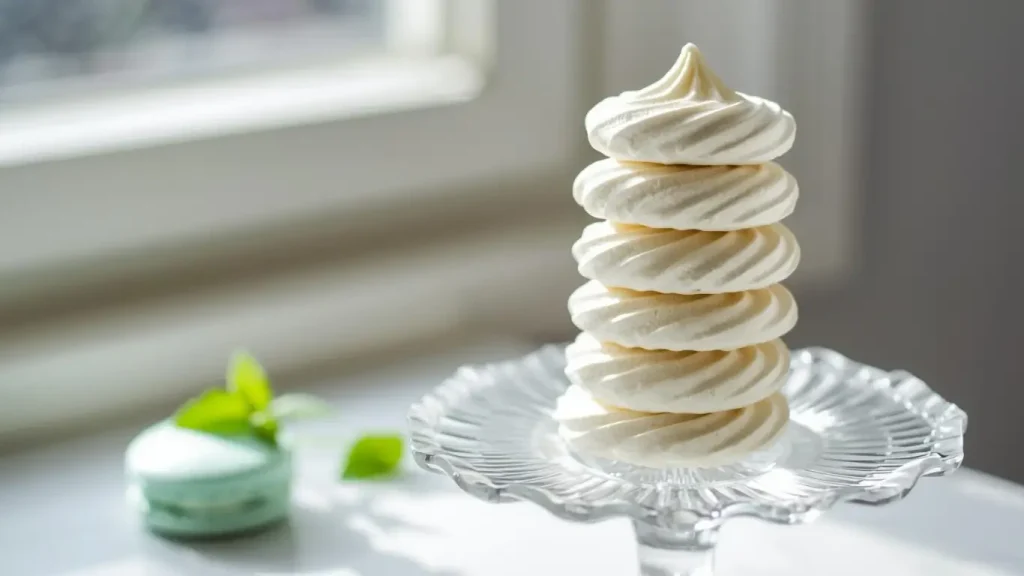
Once all sugar is added, turn the mixer to high. Beat until the meringue is glossy, thick, and holds “stiff peaks”—meaning when you lift the whisk, the peak stands straight up without drooping. Fold in the vanilla extract gently.
- Test: Rub a bit of meringue between your thumb and finger. If it feels gritty, keep whipping. It should feel smooth as silk.
Step 5: Pipe and Shape
Preheat oven to 225°F (107°C). Line a baking sheet with parchment paper (silicone mats can be too slippery). Pipe the meringue into 1.5-inch stars or dollops using a large star tip.
- Styling: Leave 1 inch of space between them. They won’t spread, but they need airflow to dry evenly.
Step 6: The “Low and Slow” Bake
Bake for 60 minutes. Do not open the oven door! After the hour, turn the oven off and leave the cookies inside with the door closed for another hour (or overnight).
- Why? Meringues don’t technically “cook”; they dry out. Cooling them gradually prevents the temperature shock that causes cracks.
Nutritional Information
Meringues are the dieter’s dream cookie due to the absence of butter, oil, or flour.
| Nutrient | Amount | % Daily Value |
|---|---|---|
| Calories | 25 kcal | 1% |
| Total Fat | 0g | 0% |
| Cholesterol | 0mg | 0% |
| Sodium | 5mg | 0% |
| Carbohydrates | 6g | 2% |
| Sugars | 6g | – |
| Protein | 0.5g | 1% |
Data Source: USDA standard reference. Values are per single 1.5-inch cookie.
Healthier Alternatives for the Recipe
While naturally fat-free, you can tweak the recipe for specific dietary goals:
- Sugar-Free/Keto: Substitute the sugar with powdered Monk Fruit or Erythritol. Be aware that these sweeteners can have a “cooling” effect on the palate but provide a stable structure.
- Vegan Meringues: Replace egg whites with Aquafaba (the liquid from a can of chickpeas). Use the same amount (approx. ½ cup) and whip it exactly like egg whites. It takes about 5 minutes longer to reach stiff peaks.
- Natural Coloring: Instead of artificial dyes, fold in freeze-dried fruit powder (strawberry or raspberry) at the very end. This adds flavor, color, and a hit of Vitamin C without adding moisture.
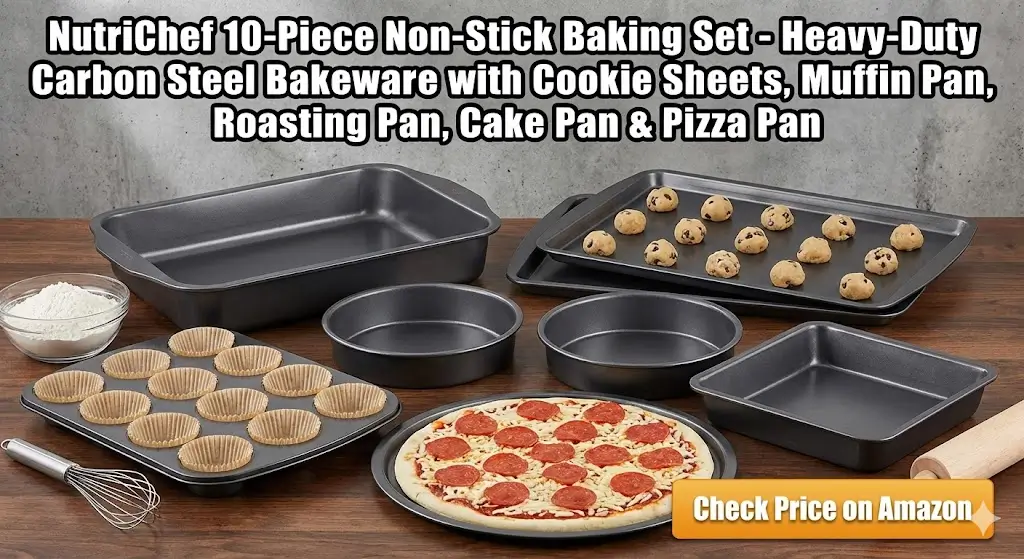
NutriChef 10-Piece Non-Stick Baking Set – Heavy-Duty Carbon Steel Bakeware with Cookie Sheets, Muffin Pan, Roasting Pan, Cake Pan & Pizza Pan
Serving Suggestions
Meringue Cookies are versatile chameleons on the dessert table:
- Eton Mess: Crush the meringues and fold them into whipped cream with fresh strawberries. The crunch adds texture to the soft cream.
- The Coffee Sidecar: Their intense sweetness makes them the perfect petite accompaniment to a bitter espresso or dark roast coffee.
- Dipped Delights: Dip the bottom half of the cooled meringues into melted dark chocolate and sprinkle with crushed pistachios for a sophisticated finish.
Common Mistakes to Avoid
Meringues are sensitive to their environment. Watch out for these pitfalls:
- The Humidity Frizz:
- Mistake: Baking on a rainy day.
- Fix: Sugar is hygroscopic (attracts water). If it’s humid (>70%), bake them 15 minutes longer or save the project for a dry day.
- Weeping (Leaking Syrup):
- Mistake: Undissolved sugar or over-baking.
- Fix: Ensure the sugar is fully dissolved during whipping (do the finger rub test).
- Chewy Centers:
- Mistake: Taking them out of the oven too soon.
- Fix: They must cool in the oven. If they are chewy, they simply haven’t dried out enough.
Storing Tips for the Recipe
Moisture is the enemy. Here is how to keep them crisp:
- Air-Tight is Law: Store immediately in a strictly airtight container. Do not leave them uncovered on the counter for more than a few hours.
- Moisture Absorbers: Place a silica gel packet or a piece of parchment paper with uncooked rice at the bottom of the container to absorb ambient moisture.
- Freezing: Surprisingly, you can freeze them! Pack gently in layers separated by parchment. They thaw almost instantly at room temperature.
Conclusion
Mastering Meringue Cookies is less about cooking and more about engineering. By respecting the ratio of sugar to protein and understanding the physics of air, you can create a dessert that looks like a masterpiece but costs pennies to make. They are light, elegant, and the ultimate proof that you don’t need a pantry full of ingredients to bake something spectacular.
Ready to whip up a storm? Try this recipe and let us know if you achieved the perfect stiff peaks! Leave a comment below with your flavor experiments, or subscribe for more science-backed baking guides.
FAQs
1. Why did my meringues crack? Cracking is usually caused by cooling too quickly. The sudden temperature drop from the hot oven to the cool kitchen contracts the air bubbles violently. Leaving them in the turned-off oven allows them to cool gradually.
2. Can I use a hand mixer instead of a stand mixer? Yes, absolutely. However, get ready for an arm workout. It will take about 10-15 minutes of continuous beating to reach the volume that a stand mixer achieves in 5-7 minutes.
3. What can I do with the leftover egg yolks? Don’t waste them! You can use the 4 yolks to make a rich Lemon Curd, a Custard, or add them to the Sourdough Chocolate Chip Cookies recipe we mentioned in our previous post for extra fudginess.
4. Can I reduce the amount of sugar? It is not recommended. In meringue, sugar isn’t just for taste; it’s structural glue. Reducing sugar weakens the protein network, leading to a foam that collapses or isn’t stable enough to pipe.