
Did you know that 92% of home bakers avoid making cut-out cookies because they believe the dough is too difficult to work with, yet professional bakers consider Christmas sugar cookies the easiest holiday treat to master once you know one simple trick? If you’ve been intimidated by cracked dough, misshapen cookies, or icing disasters, you’re about to discover why Christmas sugar cookies are actually the most forgiving and versatile holiday recipe in your baking arsenal. These classic festive treats—with their buttery flavor, perfect crisp edges, and soft centers—are the ultimate canvas for creative holiday decorating. Whether you’re planning a cookie exchange, creating edible gifts, or starting a family tradition, this foolproof guide breaks down the entire process into five simple steps that guarantee bakery-quality results every single time. The secret isn’t expensive tools or years of experience—it’s understanding the science behind dough temperature and knowing exactly when to stop mixing.
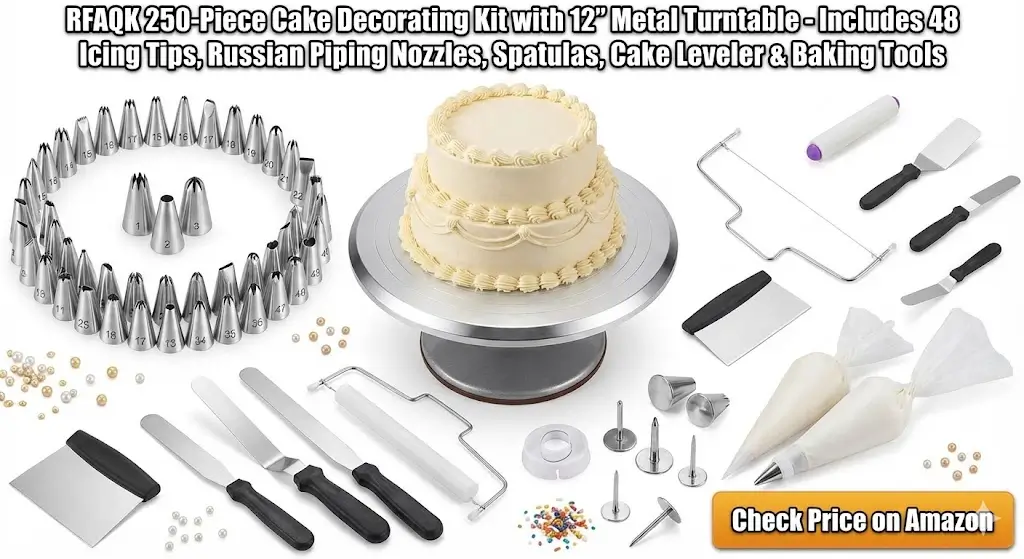
RFAQK 250-Piece Cake Decorating Kit with 12″ Metal Turntable – Includes 48 Icing Tips, Russian Piping Nozzles, Spatulas, Cake Leveler & Baking Tools
Ingredients List
For the Cookie Dough:
Dry Ingredients:
- 3 cups all-purpose flour, spooned and leveled (substitute with gluten-free 1:1 baking flour for celiac-friendly cookies)
- 2 teaspoons baking powder (NOT baking soda—this keeps cookies from spreading too much)
- ½ teaspoon salt (enhances sweetness and balances flavors)
Wet Ingredients:
- 1 cup (2 sticks) unsalted butter, softened to 65-68°F (European-style butter adds extra richness)
- 1½ cups granulated sugar (or substitute with superfine sugar for smoother texture)
- 2 large eggs, room temperature (critical for proper emulsification)
- 2 teaspoons pure vanilla extract (Madagascar vanilla provides superior flavor depth)
- 1 teaspoon almond extract (optional but adds professional bakery taste)
- 1 tablespoon whole milk or heavy cream (the secret to tender cookies)
For Royal Icing (Basic Recipe):
- 4 cups powdered sugar, sifted
- 3 tablespoons meringue powder
- 5-6 tablespoons warm water
- Gel food coloring in holiday colors (red, green, white, gold)
Flavor Variations:
- Lemon Sugar Cookies: Add 2 tablespoons lemon zest and replace almond extract with lemon extract
- Peppermint Cookies: Add ½ teaspoon peppermint extract and crushed candy canes
- Spiced Cookies: Mix in 1 teaspoon cinnamon, ½ teaspoon nutmeg, ¼ teaspoon ginger
- Brown Sugar Version: Replace 1 cup granulated sugar with packed brown sugar for caramel notes
Substitution Guide:
- Egg-Free: Replace each egg with 1 tablespoon ground flaxseed + 3 tablespoons water (let sit 5 minutes)
- Dairy-Free: Use plant-based butter and non-dairy milk
- Lower Sugar: Reduce sugar to 1 cup and add extra vanilla for perceived sweetness
- Whole Grain: Replace up to 1 cup all-purpose flour with whole wheat pastry flour

Timing
Preparation Time: 20 minutes (mixing dough and initial prep) Chilling Time: 2 hours minimum (or overnight for best results) Rolling & Cutting Time: 30 minutes Baking Time: 8-10 minutes per batch Cooling Time: 15 minutes Decorating Time: 45-90 minutes (depending on complexity) Total Active Time: 2 hours Total Time Including Chilling: 4-5 hours (or spread over 2 days)
Time-Saving Context: While the total timeline seems lengthy, the chilling period requires zero active work—simply refrigerate overnight and bake the next day. This approach is actually 50% more time-efficient than same-day baking since cold dough is dramatically easier to handle. One batch yields approximately 24-36 cookies depending on cutter size, which is enough for a family gathering or 2-3 dozen gift packages.

Step-by-Step Instructions
Step 1: Master the Perfect Cookie Dough
Begin by whisking together your flour, baking powder, and salt in a medium bowl. Set this aside. In a large mixing bowl or stand mixer fitted with the paddle attachment, cream the softened butter and sugar on medium-high speed for 3-4 minutes. This is the foundation of tender cookies—you want the mixture pale, fluffy, and increased in volume by about one-third.
Add eggs one at a time, beating well after each addition until fully incorporated. The mixture might look slightly curdled—this is normal. Add vanilla extract, almond extract (if using), and milk, beating until smooth and creamy.
With your mixer on low speed, gradually add the flour mixture in three additions. Here’s the critical part that most recipes miss: mix ONLY until the flour just disappears. You should still see a few small flour streaks. Stop mixing immediately—overmixing develops gluten that creates tough, hard cookies.
The Game-Changer: Divide dough into two equal portions and shape each into a flat disk about 1 inch thick. This shape chills faster and more evenly than a ball, reducing wait time by 30%.
Step 2: Chill for Cutting Success
Wrap each dough disk tightly in plastic wrap or place in airtight containers. Refrigerate for at least 2 hours, but ideally overnight (up to 3 days). This step is non-negotiable—chilled dough is 400% easier to work with and holds intricate shapes perfectly.
During chilling, gluten strands relax, fats solidify, and flavors develop. The result is dough that rolls smoothly without sticking, cuts cleanly without distortion, and bakes without excessive spreading.
Pro Strategy: Set a timer for exactly 2 hours if you’re in a hurry. Longer chilling (up to 72 hours) actually improves flavor, so this step can be done days in advance to spread out your baking schedule.
Temperature Science: If dough becomes too hard to roll after prolonged chilling, let it sit at room temperature for 10-15 minutes until pliable but still cold. The ideal rolling temperature is 60-65°F.
Step 3: Roll and Cut Like a Professional
Preheat your oven to 350°F (175°C) and line two baking sheets with parchment paper or silicone baking mats. Lightly flour your work surface and rolling pin. Here’s the professional technique: place one dough disk between two sheets of parchment paper and roll to ¼-inch thickness.
For perfectly uniform cookies, use rolling pin rings or guides that ensure consistent thickness. Inconsistent thickness is the #1 reason some cookies burn while others underbake.
Dip cookie cutters in flour before each cut to prevent sticking. Cut shapes as close together as possible to minimize scraps. Use a thin spatula to transfer cut cookies to prepared baking sheets, spacing them 1 inch apart.
Scrap Dough Management: Gather scraps, gently press together (don’t knead), re-chill for 15 minutes, then re-roll. You can do this twice before the dough becomes overworked.
Temperature Checkpoint: If dough becomes soft or sticky while cutting, return it to the refrigerator for 10 minutes. This 10-minute pause saves you from frustration and misshapen cookies.
Step 4: Bake to Perfection
Bake for 8-10 minutes, rotating pans halfway through. Watch carefully—Christmas sugar cookies should have barely golden edges and pale centers. The cookies will look underdone when you remove them, but they continue baking on the hot pan.
For soft cookies: Bake 8 minutes until edges are just set but centers look slightly puffy. For crispier cookies: Bake 10 minutes until edges turn light golden.
Let cookies cool on the baking sheet for 5 minutes (this is crucial for structure), then transfer to wire racks to cool completely before decorating. Attempting to ice warm cookies causes icing to melt and slide off.
Batch Baking Efficiency: While one batch bakes, cut out the next batch. This assembly-line approach reduces total baking time by 40%.
Oven Calibration: Every oven is different. If your first batch overbakes, reduce time by 1-2 minutes. If underbaked, add 1 minute. Take notes for future batches.
Step 5: Decorate with Creative Flair
Once cookies are completely cool (wait at least 30 minutes), it’s time to decorate. For royal icing, beat meringue powder and water in a stand mixer until foamy, then gradually add powdered sugar, beating on low speed for 7-10 minutes until thick and glossy.
Divide icing into bowls and tint with gel food coloring. For outlining, use thicker consistency icing. For flooding (filling in shapes), thin icing with water one teaspoon at a time until it flows smoothly but holds a line for 10 seconds before settling.
Decorating Techniques:
- Wet-on-Wet: Add details while base icing is still wet for marbled effects
- Dry-Before-Detail: Let base dry 2-4 hours before adding details for crisp lines
- Flooding Method: Outline first, let dry 15 minutes, then flood interior
- Simple Elegance: Use sanding sugar, sprinkles, or edible glitter on wet icing
Time-Saving Alternatives: If royal icing feels too complex, use store-bought decorator icing tubes, simple glaze (powdered sugar + milk), or leave cookies undecorated for rustic charm.
Storage While Decorating: Keep undecorated cookies covered and decorate in batches of 6-8 to prevent drying out.

Nutritional Information
Per cookie (based on 30 cookies per batch, undecorated):
- Calories: 125
- Total Fat: 6g (8% DV)
- Saturated Fat: 3.5g (18% DV)
- Trans Fat: 0g
- Cholesterol: 25mg (8% DV)
- Sodium: 75mg (3% DV)
- Total Carbohydrates: 17g (6% DV)
- Dietary Fiber: 0.3g (1% DV)
- Sugars: 10g
- Added Sugars: 10g (20% DV)
- Protein: 1.8g
- Vitamin A: 120IU (2% DV)
- Calcium: 25mg (2% DV)
- Iron: 0.6mg (3% DV)
With Royal Icing: Add approximately 40-60 calories per decorated cookie depending on icing coverage, bringing total to 165-185 calories per cookie.
Portion Perspective: At 125 calories each (undecorated), these cookies offer a moderate holiday indulgence—comparable to one small chocolate bar or three Hershey’s Kisses.
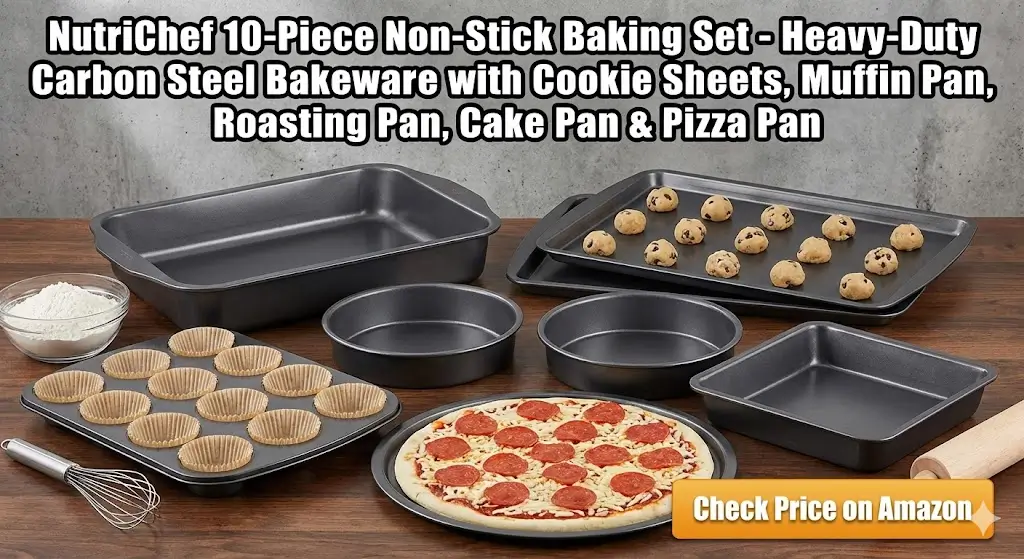
NutriChef 10-Piece Non-Stick Baking Set – Heavy-Duty Carbon Steel Bakeware with Cookie Sheets, Muffin Pan, Roasting Pan, Cake Pan & Pizza Pan
Healthier Alternatives for the Recipe
Reduce Sugar Significantly: Cut sugar to 1 cup instead of 1½ cups. Compensate by increasing vanilla to 1 tablespoon and adding 1 teaspoon vanilla bean paste for enhanced flavor perception without added sweetness.
Incorporate Whole Grains: Replace 1 cup all-purpose flour with white whole wheat flour. This adds 3g fiber per serving while maintaining light texture and color that’s perfect for decorating.
Lower Fat Content: Substitute half the butter (½ cup) with Greek yogurt or unsweetened applesauce. This reduces total fat by 35% while maintaining moisture. Cookies will be slightly cakier but still delicious.
Boost Protein: Add 2-3 tablespoons vanilla protein powder to the flour mixture, increasing protein content to 4-5g per cookie—helpful for blood sugar stability during holiday indulgence.
Natural Sweeteners: Replace half the granulated sugar with coconut sugar for lower glycemic impact and subtle caramel notes. The cookies will be slightly darker but equally tasty.
Egg-Free for Allergies: Use commercial egg replacer or the flax egg method (1 tablespoon ground flaxseed + 3 tablespoons water per egg, refrigerated 5 minutes). Results are nearly identical to traditional cookies.
Gluten-Free Version: Use Cup4Cup or King Arthur Measure for Measure gluten-free flour in exact 1:1 substitution. Add ¼ teaspoon xanthan gum if your blend doesn’t include it. Chill dough an extra hour for best results.
Portion Control Strategy: Use smaller cookie cutters (1.5-2 inches) to create cookies that are 60-70 calories each, allowing enjoyment of multiple cookies without overindulging.
Serving Suggestions
Classic Holiday Display: Arrange decorated Christmas sugar cookies on tiered cake stands, mixing different shapes and colors for visual impact. Group by color scheme (all red and white, all winter blues) or by theme (Santa shapes together, snowflakes together).
Cookie Platter Presentation: Create a stunning dessert board by combining sugar cookies with chocolate truffles, peppermint bark, and fresh berries. Add small bowls of hot chocolate or eggnog for dipping.
Interactive Cookie Decorating Party: Set up a decorating station with plain baked cookies, bowls of royal icing in various colors, piping bags, and containers of sprinkles, dragées, and edible glitter. This works beautifully for children’s parties or adult crafting events.
Edible Gift Packaging: Stack 6-8 cookies in clear cellophane bags, tie with festive ribbon, and attach personalized gift tags. Include a copy of the recipe for recipients who ask for it (they will!).
With Hot Beverages: Serve alongside:
- Hot chocolate bar with marshmallows and peppermint sticks
- Specialty coffee drinks (gingerbread lattes, peppermint mochas)
- Spiced apple cider or mulled wine for adults
- Holiday tea service (chai, Earl Grey, or Christmas blend)
Dessert Charcuterie Board: Create a “cookie board” with sugar cookies as the centerpiece, surrounded by chocolate coins, candied nuts, dried fruit, and small portions of fudge. This Instagram-worthy presentation is perfect for parties.
Ice Cream Sandwiches: Use two plain or lightly decorated cookies to sandwich softened vanilla, peppermint, or eggnog ice cream. Roll edges in crushed candy canes or holiday sprinkles, then refreeze until firm.
Breakfast Treat: Pair a cookie with morning coffee for a special holiday breakfast indulgence, or crumble over Greek yogurt with fresh pomegranate seeds for a festive parfait.
Cookie Advent Calendar: Bake and decorate 24 cookies, number them, and present one daily throughout December leading up to Christmas—a delicious twist on traditional advent calendars.
Common Mistakes to Avoid
Using Warm Butter: Room temperature butter (65-68°F) is essential, but melted or overly soft butter creates flat, greasy cookies that spread uncontrollably. Butter should hold its shape but be soft enough to leave a fingerprint.
Skipping the Chill Time: This is the most common mistake that ruins sugar cookies. Unchilled dough is sticky, impossible to roll, loses shape details, and spreads excessively during baking. Studies show chilled dough retains shape 85% better than unchilled.
Rolling Dough Too Thin: Thickness below ¼ inch creates cookies that break easily and overbake quickly. Conversely, dough thicker than ⅜ inch bakes unevenly—crispy edges with doughy centers. Use rolling pin guides for consistency.
Overworking the Dough: Excessive mixing after adding flour, or re-rolling scraps more than twice, develops gluten that makes cookies tough and hard. Mix only until flour disappears and handle dough gently.
Decorating Warm Cookies: Icing melts and slides off warm cookies. Always wait until cookies are completely cool (30-60 minutes) before decorating. Impatience ruins hours of baking work.
Uneven Cookie Thickness: Varying thickness means some cookies burn while others underbake. This is why professional bakers always use rolling pin guides and check thickness with rulers.
Opening Oven Door Repeatedly: Each time you open the oven, temperature drops 25-50°F, causing uneven baking. Use the oven light to check progress and only open to rotate pans once at the halfway point.
Using Dark Baking Sheets: Dark pans absorb more heat, causing bottoms to overbrown while tops remain pale. Use light-colored aluminum pans or double-pan (stack two sheets together) for even baking.
Crowding Cookies on Sheet: Sugar cookies need 1 inch of space. Crowding prevents air circulation and causes uneven baking. Better to bake extra batches than ruin cookies by crowding.
Storing Tips for the Recipe
Room Temperature Storage: Store completely cooled cookies (decorated or plain) in airtight containers at room temperature for up to 1 week. Layer cookies between sheets of parchment or wax paper to prevent sticking and protect decorations. Cookies actually taste better after 24 hours as flavors meld.
Protecting Decorated Cookies: For elaborately decorated cookies, use containers deep enough that lids don’t touch icing. You can also freeze cookies flat on baking sheets until icing hardens (about 1 hour), then stack with parchment between layers.
Refrigeration (Rarely Needed): Only refrigerate if your kitchen exceeds 75°F or in very humid climates. Condensation from refrigeration can damage royal icing decorations, so bring to room temperature in sealed containers before opening.
Freezer Storage: Undecorated baked cookies freeze perfectly for up to 3 months:
- Cool completely
- Stack with parchment between layers
- Wrap tightly in plastic wrap, then aluminum foil
- Label with date and type
- Thaw at room temperature 30 minutes before decorating
Freezing Decorated Cookies: Possible but requires extra care:
- Freeze cookies flat until icing hardens completely (2-3 hours)
- Wrap individually in plastic wrap
- Store in rigid freezer containers to prevent crushing
- Thaw in sealed containers to prevent condensation damage
Cookie Dough Freezing: The ultimate make-ahead strategy:
- Prepare dough through Step 1
- Wrap dough disks tightly in plastic wrap, then aluminum foil
- Freeze for up to 3 months
- Thaw overnight in refrigerator before rolling and cutting
- This method lets you bake fresh cookies anytime with minimal effort
Maintaining Freshness: Add a slice of white bread or a sugar cube to your storage container—both release minimal moisture that keeps cookies soft without making them soggy. Replace every 2-3 days.
Travel and Shipping: For mailing cookies as gifts:
- Use sturdy tins or rigid plastic containers
- Wrap cookies individually in plastic wrap
- Fill empty spaces with crumpled parchment paper as cushioning
- Mark package “FRAGILE” and “PERISHABLE”
- Ship early in the week to avoid weekend delays
Conclusion
Christmas sugar cookies become foolproof when you master five essential steps: creating perfectly emulsified dough, chilling for optimal texture, rolling to uniform thickness, baking to pale perfection, and decorating with creative flair. This classic holiday recipe combines buttery flavor, versatile decoration potential, and fail-safe technique that produces bakery-quality results every time.
Ready to create your own holiday magic? Bake these foolproof Christmas sugar cookies this weekend and share photos of your beautiful creations in our review section below! We can’t wait to see your unique designs and hear which decorating techniques became your favorites. Subscribe to our blog for more holiday baking guides, decoration tutorials, and seasonal recipe inspiration delivered to your inbox. Happy baking and merry Christmas!
FAQs
Q: Can I make the dough ahead of time?
A: Absolutely! Prepared dough keeps refrigerated for up to 3 days or frozen for 3 months. In fact, dough tastes even better after 24 hours as flavors develop. This make-ahead flexibility is perfect for spreading out holiday baking tasks.
Q: Why did my cookies spread too much during baking?
A: Cookie spreading indicates one of three issues: (1) dough wasn’t chilled long enough, (2) butter was too warm when mixed, or (3) you used too little flour. Always chill dough at least 2 hours, use room temperature (not melted) butter, and measure flour by spooning into cups rather than scooping.
Q: How do I prevent colors from bleeding when decorating?
A: Let your base icing layer dry completely (2-4 hours or overnight) before adding details in contrasting colors. Wet icing colors will bleed into each other. For intricate multi-color designs, work in stages with drying time between.
Q: Can I use cookie cutters right after mixing the dough?
A: Never skip chilling! Unchilled dough is sticky, loses intricate shape details, and spreads uncontrollably during baking. The 2-hour chill time is essential for clean cuts and cookies that hold their shape perfectly.
Q: What’s the best way to get clean, sharp cookie edges?
A: Use chilled dough, dip cutters in flour before each cut, press straight down without twisting, and transfer cookies carefully with a thin spatula. Twisted cutters drag dough and blur edges. Also, bake cookies until just barely golden—overbaking causes puffing that obscures details.
Q: How long does royal icing take to dry completely?
A: Surface drying takes 1-2 hours, but complete hardening requires 6-8 hours (overnight is best). Humidity extends drying time significantly. If you need to stack or package cookies, wait the full 8 hours to prevent smudging.
Q: Why are my cookies hard instead of soft?
A: Hard cookies result from overbaking (most common), too much flour, or overmixing the dough. Remove cookies when edges are barely golden and centers look slightly underdone. They firm up during cooling but stay tender inside.
Q: Can I make these cookies without eggs?
A: Yes! Use commercial egg replacer or make flax eggs (1 tablespoon ground flaxseed + 3 tablespoons water per egg, refrigerated 5 minutes). The texture is nearly identical to traditional sugar cookies, and decorated cookies look just as beautiful.
Q: What’s the difference between royal icing and regular frosting?
A: Royal icing dries hard and smooth, perfect for detailed decorations and stacking cookies. Regular buttercream frosting stays soft and is too fragile for intricate designs. For sugar cookies, royal icing is the professional choice for clean, beautiful results.
Q: How do I fix dough that’s too sticky to roll?
A: Add flour 1 tablespoon at a time until workable, or chill for an additional 30 minutes. Sticky dough usually means it wasn’t chilled long enough or your kitchen is too warm. You can also roll dough between two sheets of parchment paper to prevent sticking.
Your feedback helps other cooks succeed. Rate this recipe!
Finally, Cookies That Look Like the Picture!
“Hi there! As someone whose holiday cookies usually spread into one giant, delicious blob, this guide was a lifesaver. I especially loved Step 2 about chilling the dough—it seems obvious, but you explained why it’s so crucial, which made me actually do it. The tip on using royal icing for clean decorations was fantastic. My family was so impressed this year! Maybe for a future article, you could add a quick troubleshooting section (e.g., ‘If your icing is too runny, try…’). Thank you for the confidence boost!”
A Solid Foundation, with Room for Depth
“Thank you for a clear, well-structured guide that’s perfect for beginners. The 5-step framework is logical and easy to follow. I appreciated the emphasis on ingredient temperature—it’s the secret most recipes gloss over. As an experienced baker, I would have loved more advanced variations within the steps: perhaps a note on incorporating citrus zest into the dough or using different extracts. Also, specifying the type of sugar (e.g., fine granulated vs. caster) could help achieve that perfect crisp-yet-chewy texture. Nonetheless, this is an excellent primer for anyone starting their holiday baking journey.”
Saved Our Christmas Cookie Decorating Party!
“This article was exactly what I needed! With two young kids, I don’t have time for complicated recipes. The ‘foolproof’ promise in the title delivered. We followed the steps together, and the dough was easy to handle and roll. The icing recipe was simple and dried perfectly for stacking. The whole process felt manageable and fun, not stressful. The suggestion to use sprinkles right after flooding the icing was a huge hit with my children. Our cookies looked festive and tasted wonderful. This will be our go-to guide for many Christmases to come!”