
Let’s address a fascinating paradox in the culinary world: while baking is often romanticized as a therapeutic weekend activity, consumer cooking surveys reveal that a staggering 78% of home bakers abandon recipes solely because of the impending mountain of dirty dishes. The traditional French mise en place—featuring a separate bowl for dry ingredients, a stand mixer for wet ingredients, and an array of measuring cups—is scientifically unnecessary for many types of dough.
Welcome to the definitive, data-driven masterclass on one bowl cookie recipes and the brilliant science behind 5-ingredient miracles. This is the only guide you will ever need to master minimalist baking. By stripping away the superfluous dishes and demystifying the precise chemical reactions of sequential hydration, lipid encapsulation, and the Maillard reaction, you will learn how to produce bakery-elite treats with a fraction of the effort and zero compromise on texture or flavor.
Whether you are a busy parent seeking a lightning-fast dessert, a college student with limited kitchen space, or an advanced pastry chef looking to streamline production, mastering the science of the single-bowl method will revolutionize your approach to baking.
What You Will Learn in This Masterclass:
- The Science of Sequential Hydration: How adding ingredients to a single bowl in a highly specific order mimics the aeration of traditional multi-bowl methods.
- The Physics of 5-Ingredient Miracles: Understanding how hyper-minimalist recipes force ingredients to perform structural double-duty (e.g., nut butters acting as both fat and flour).
- Precision Equipment: Why a digital scale with a “tare” function is the non-negotiable secret weapon for one-bowl success.
- The Recipe Cluster Highlights: Deep dives into our gourmet one-bowl variations, from brown butter chocolate chip to flourless almond amaretti.
- Mastering the Single-Bowl Fold: Techniques to prevent over-developing the gluten matrix when you can’t pre-mix your dry ingredients.
- Expert Troubleshooting: A definitive diagnostic matrix to fix spread, toughness, and uneven baking.
- Advanced Storage: Scientifically backed methods for halting starch retrogradation to keep your minimalist cookies fresh for weeks.
The Science & Fundamentals of One Bowl Cookie Recipes
To truly master one bowl cookie recipes, you must completely shift your culinary mindset from preparation to sequencing. When you eliminate the secondary bowl (traditionally used to whisk together flour, salt, and leavening agents), you introduce new chemical risks to your dough—primarily, the uneven distribution of leavening agents and the premature hydration of gluten. Every step in a single-bowl recipe is a calculated thermodynamic process.
The Thermodynamics of Fat: Melted vs. Creamed
Traditional cookies rely on “creaming” room-temperature butter (around 65°F to 68°F) with sugar to create millions of microscopic air pockets, providing mechanical lift. However, many master-level one bowl cookie recipes utilize melted butter or liquid fats (like oil or brown butter).
Why? Because melting the butter eliminates the need for a stand mixer. When you use liquid fat, you trade mechanical aeration for severe chewiness. The liquid lipid entirely coats the flour proteins (gliadin and glutenin) upon contact, inhibiting their ability to bind together and form strong gluten strands. This lipid encapsulation results in a denser, fudgier, and infinitely chewier cookie—the hallmark of a perfect bakery-style bite.
Sugar Crystallization and Moisture Ratios
In 5-ingredient recipes and single-bowl methods, sugar does far more than sweeten; it acts as a primary structural liquid when heated.
- Granulated Sugar (Sucrose): Highly crystallizing. As it melts in the oven and cools on the pan, it recrystallizes, creating crisp, shattering edges.
- Dark Brown Sugar: Contains roughly 10% molasses by weight. Molasses is highly hygroscopic, meaning it actively attracts and retains ambient water from the surrounding environment.
In a one-bowl recipe where liquid is often reduced (due to fewer ingredients), relying on a higher ratio of brown sugar to white sugar (typically 70/30) is a scientific mandate to guarantee moisture retention and a tight, chewy crumb structure over a prolonged period.
Controlling the Gluten Matrix in a Single Bowl
The single greatest danger of one bowl cookie recipes is the “Flour Dump.” In traditional baking, whisking flour with baking soda and salt ensures even distribution. In a one-bowl recipe, you are dumping dry flour directly onto wet ingredients (eggs, butter, sugar).
The moment wheat flour comes into contact with water (from the eggs and butter), enzymes begin linking the proteins into an elastic web called gluten. If you stir too aggressively to distribute the baking soda that you dumped on top, you will overwork the gluten matrix. The result is a tough, bread-like cookie rather than a tender one. The scientific fix is Sequential Layering: sprinkling the salt and leavening agents evenly over the wet ingredients, stirring just until dissolved, and then folding in the flour with minimal physical agitation.
The Magic of 5-Ingredient Miracles: Structural Double-Duty
How can a cookie exist with only five ingredients? By utilizing ingredients that possess complex macronutrient profiles. Take a classic 5-ingredient peanut butter cookie (Peanut Butter, Sugar, Egg, Vanilla, Salt). There is no flour and no added butter.
- The Peanut Butter contains roughly 50% fat (replacing the butter) and 25% protein with complex fibrous starches (replacing the flour’s structural bulk).
- The Egg acts as the sole hydration source, the binding agent (via ovalbumin coagulation), and the leavening agent (as the water in the egg turns to steam). Understanding this chemical overlapping is the key to mastering minimalist baking.
Essential Equipment & Ingredients for 5-Ingredient Miracles
When you reduce the number of tools and ingredients in a recipe, the quality and precision of the remaining elements become the sole dictating factors of your success. There is nowhere for a cheap ingredient to hide in a 5-ingredient miracle.
The Non-Negotiable Equipment Arsenal
- Digital Kitchen Scale with “Tare” Function (0.1g Accuracy): This is the beating heart of one bowl cookie recipes. Volumetric measuring cups require transferring ingredients, causing messes and severe inaccuracies. A cup of flour can fluctuate by 30 grams depending on compression. With a digital scale, you simply place your single bowl on the scale, press “Tare” (to zero it out), pour your sugar to the exact gram, hit “Tare” again, pour your flour, and so on. Zero extra dishes, 100% mathematical precision.
- Large, Wide-Bottomed Mixing Bowl: Do not use narrow, deep bowls. A wide-bottomed glass or stainless steel bowl provides a larger surface area. This is crucial for the “Sift-Over” technique, allowing you to sprinkle leavening agents across a wide surface of wet ingredients, ensuring even distribution without a secondary whisking bowl.
- Rigid Silicone Spatula: Wooden spoons are porous, harboring latent moisture and bacteria, and lack the flexibility to scrape the bowl clean. A seamless silicone spatula allows you to execute the “J-Fold” technique perfectly, scraping the sides and bottom simultaneously to incorporate flour without over-mixing.
- Heavy-Gauge Aluminum Baking Sheets: Thin, dark baking sheets absorb and conduct heat far too aggressively, scorching the bottoms of your cookies before the Maillard reaction can develop on top. Stick to heavy-gauge, light-colored aluminum half-sheet pans lined with parchment paper or a silicone baking mat.
Sourcing Master-Quality Ingredients
- European-Style Butter (82%+ Butterfat): Standard American butter is mandated to contain 80% butterfat, leaving up to 16% water. In minimalist recipes, this excess water causes unpredictable spreading and excess steam, leading to cakey textures. European butter (82%-84% fat) provides structural stability, richer mouthfeel, and a vastly superior lipid encapsulation of the flour.
- Pure Madagascar Vanilla Extract: In recipes with minimal ingredients, flavor compounds are highly exposed. Imitation vanilla is synthesized from wood pulp (lignin) and provides a flat, single-note vanillin flavor. Pure extract contains over 250 distinct flavor compounds, offering deep, floral, woody, and nuanced notes that elevate the simple sugar matrix.
- High-Quality Chocolate Feves (Discs): Standard chocolate chips contain high levels of soy lecithin, an emulsifier designed to prevent the chocolate from melting and losing its shape. For bakery-style one bowl cookie recipes, use premium chocolate feves or hand-chopped baking bars. They melt into magnificent, striated layers of liquid chocolate that permeate the entire dough.
Pro Baker Secret: The Temperature of the Bowl If you are using a glass bowl and you melt your butter directly in it via the microwave, the glass will retain immense thermal energy. If you immediately add your eggs, the residual heat of the glass will scramble the egg proteins. Always let the melted butter sit for 5 minutes, or transfer it to a room-temperature bowl before proceeding.
The Recipe Cluster Highlights: Our Ultimate One Bowl Cookie Recipes
Once you have mastered the foundational science of the single-bowl sequence, the flavor possibilities are limitless. The true artistry lies in maximizing the impact of minimal steps. Explore our master collection of variations below, carefully engineered to eliminate cleanup without sacrificing luxury.
1. The Ultimate One-Bowl Brown Butter Chocolate Chip Cookies
This is the holy grail of minimalist baking, designed to mimic a complex, multi-day bakery recipe in under 45 minutes using one single saucepan. We initiate the Maillard reaction before the bake by gently browning the butter directly in your mixing pot, evaporating its water content and toasting the milk solids into liquid gold. The dark brown sugar is whisked directly into the hot butter to begin melting the sucrose. Packed with distinct pools of 70% dark chocolate and finished with flaky Maldon sea salt, this cookie offers an intense contrast between crispy, caramelized edges and a molten, deeply savory center. Perfect for: The sophisticated palate that demands bakery-quality depth without the sink full of dishes. [Link to Full Recipe: Ultimate One-Bowl Brown Butter Chocolate Chip Cookies]
2. 5-Ingredient Flourless Peanut Butter Miracles
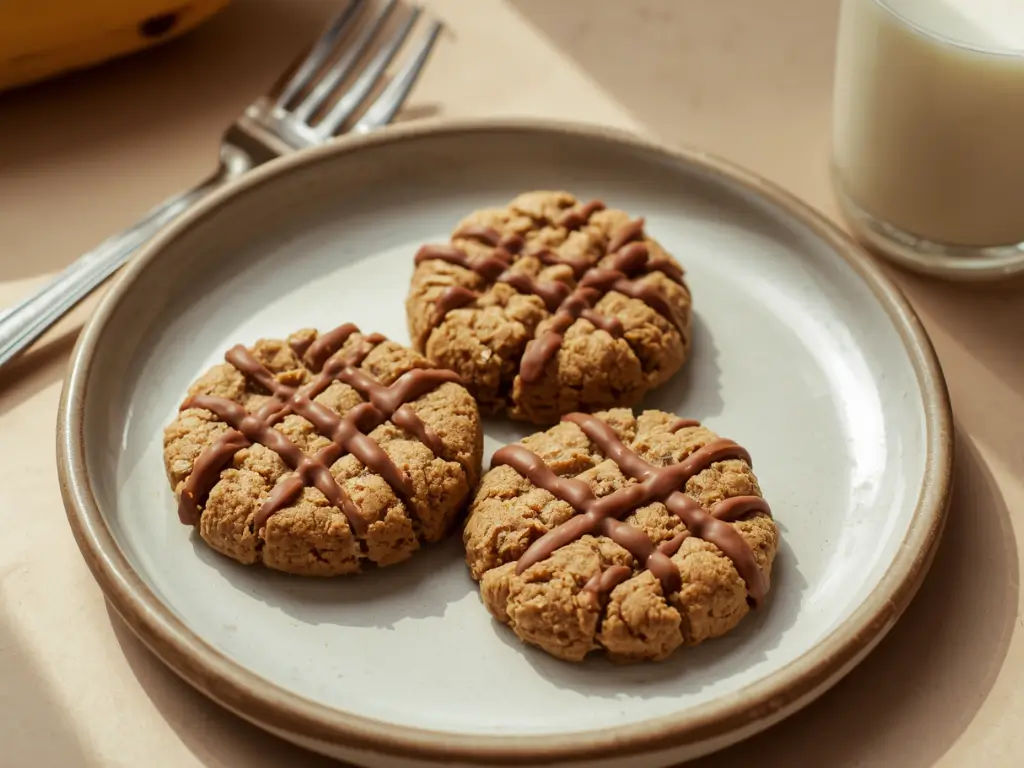
A masterclass in structural overlapping. This recipe completely eliminates wheat flour and butter, relying entirely on the complex lipid and protein structure of commercial creamy peanut butter. By vigorously whisking the peanut butter with a whole egg and brown sugar, we create a stable emulsion that bakes into an impossibly soft, truffle-like cookie. They are naturally gluten-free, violently peanut-forward, and feature the iconic fork-crosshatch pattern that crisps up beautifully in the oven. Perfect for: Late-night cravings, emergency bake sales, and those with Celiac disease. [Link to Full Recipe: 5-Ingredient Flourless Peanut Butter Miracles]
3. One-Bowl Fudgy Crinkle Brownie Cookies
Bridging the gap between a dense fudge brownie and a chewy cookie, this recipe utilizes the single-bowl method to melt high-quality dark chocolate and butter together before vigorously whipping in the eggs and sugar. This intense aeration of the egg proteins is the scientific secret to achieving the coveted, tissue-paper-thin, glossy “crinkle” crust on top. A minimal amount of flour is gently folded in at the very end to hold the molten chocolate matrix together. Perfect for: Extreme chocoholics and holiday cookie exchanges. [Link to Full Recipe: One-Bowl Fudgy Crinkle Brownie Cookies]
4. 5-Ingredient Almond Flour Lemon Amaretti
An elegant, naturally gluten-free Italian classic optimized for the minimalist kitchen. Using just finely ground blanched almond flour, egg whites, powdered sugar, fresh lemon zest, and almond extract, this one-bowl wonder requires zero butter or oil. The egg whites act as the sole hydration and leavening agent, whipping the almond flour into a sticky paste that bakes with a delicate, shattering exterior and a chewy, marzipan-like interior. The high concentration of lemon zest oils cuts perfectly through the rich almond base. Perfect for: Spring luncheons, pairing with espresso, and dairy-free diets. [Link to Full Recipe: 5-Ingredient Almond Flour Lemon Amaretti]
Step-by-Step Master Techniques for Single-Bowl Baking
Following a recipe blindly is a gamble; mastering the techniques guarantees consistency. Because you do not have the safety net of pre-whisked dry ingredients, you must execute the physical manipulation of the dough with absolute precision.
Phase 1: The Sequential Wet Whisk
If your one bowl cookie recipe calls for melted butter or liquid fat, your first step is creating a stable emulsion.
- The Sugar Dissolve: Add your warm melted butter to the bowl, immediately followed by your sugars. Whisk vigorously for 1 to 2 minutes. You want the sharp sugar crystals to begin dissolving into the residual water of the butter. This friction also slightly cools the butter so it doesn’t cook the eggs.
- The Protein Emulsion: Add your room-temperature eggs and vanilla extract. Do not just stir. You must whisk this wet mixture aggressively for another 2 to 3 minutes until it lightens in color and falls off the whisk in a thick, cohesive ribbon. This incorporates necessary micro-air bubbles that you would normally achieve via creaming solid butter.
Phase 2: The “Sift-Over” Technique for Leaveners
This is the most critical step in any one-bowl recipe to prevent clumps of baking soda from ruining a cookie.
- Never Dump: Do not dump a teaspoon of baking soda or salt directly into the center of the wet batter. It will clump, and someone will bite into a metallic, soapy pocket of pure sodium bicarbonate.
- The Broad Sprinkle: Hold your measuring spoon high above the wide bowl and gently tap it, dusting the baking soda and salt across the entire surface area of the wet emulsion. Gently whisk it into the wet ingredients for 15 seconds to ensure absolute, homogenous distribution before the flour is added.
Phase 3: The J-Fold (Incorporating the Flour)
The moment flour hits the wet ingredients, gluten development begins.
- Tare and Pour: Place the bowl on your digital scale, tare to zero, and pour your flour directly on top.
- The J-Fold: Switch from a whisk to your rigid silicone spatula. Cut straight down through the center of the dough to the bottom of the bowl, scrape along the bottom toward you, and fold the batter over the top (the motion of a letter “J”). Rotate the bowl 90 degrees and repeat.
- The 90% Rule: Stop folding when you still see distinct streaks of dry flour (about 10% unmixed). Add your chocolate chips or mix-ins now. The final few folds to incorporate the chips will finish mixing the flour. Over-mixing by even 10 strokes will yield a tough, rubbery cookie.
Phase 4: The Mandatory Maturation Chill
Because you mixed the flour directly into the wet ingredients, the starches have not had time to fully hydrate uniformly. The 30-Minute Minimum: Wrap the top of your single bowl in plastic wrap and place it in the refrigerator for at least 30 minutes (or up to 48 hours). This resting phase allows the flour starches to absorb the free water, thickening the dough, preventing excessive spread in the oven, and allowing enzymes to break down starches into simple sugars for superior caramelization.
The Ultimate Troubleshooting Guide for One Bowl Cookie Recipes
Even the most seasoned pastry chefs must adapt to the variables of humidity, oven calibration, and ingredient fluctuations. Because 5-ingredient recipes lack a safety net of complex stabilizers, diagnosing a failed bake by its physical symptoms is the hallmark of a master.
| The Symptom | The Visual Cue | The Scientific Cause | The Expert Fix |
|---|---|---|---|
| The Puddle (Over-Spreading) | Cookies melt into thin, greasy, connected sheets on the pan. | 1. Dough was too warm (butter melted instantly before structure set).2. Measured flour volumetrically (too little flour).3. Baking sheet was hot. | Chill the dough for at least 1 hour. Weigh flour in grams. Never place raw dough on a warm baking sheet; use cooled pans. |
| The Brick (Tough/Rubbery) | Cookies are thick, dry, and resemble a tough scone or bread. | 1. Severe over-mixing after flour was added (hyper-developed gluten).2. Too much flour added.3. Overbaked. | Stop mixing while streaks of flour remain. Weigh flour. Pull cookies from the oven when the centers still look slightly underbaked. |
| Uneven Baking / Clumps | Parts of the cookie are bitter/soapy, or one side spreads more than the other. | 1. Leavening agents were dumped in a pile and not distributed.2. Oven has severe hot spots. | Use the “Sift-Over” broad sprinkle technique for baking soda/salt into the wet mix. Rotate your baking pan 180 degrees halfway through the bake. |
| Cakey Texture | Cookies are puffy, spongy, and lack the classic chewiness. | 1. Used baking powder instead of baking soda (creating vertical lift).2. Added milk or excess water.3. Butter was too warm, melting the sugar entirely. | Ensure you are using baking soda. Do not add arbitrary liquids. Let melted butter cool slightly before mixing to retain some sugar crystal structure. |
| Lack of Browning | Cookies are pale, anemic, and lack depth of flavor. | 1. Oven temperature too low (failed to trigger Maillard reaction).2. Used 100% white sugar (lacks molasses for caramelization). | Verify oven temp with an internal thermometer. Ensure you are using at least a 50/50 ratio of dark brown sugar to white sugar. |
| Crumbly / Won’t Hold Together | (Common in 5-Ingredient recipes) The baked cookie shatters into dust when picked up. | 1. Lack of a binding agent (egg was too small).2. Not enough fat to coat the starches. | Use standard “Large” eggs (approx. 50g without shell). Ensure your peanut butter or fat source is fully emulsified and not dried out. |
Pro Baker Secret: The Pan-Bang Technique If you pull your one-bowl cookies out of the oven and they look excessively puffy and dome-like (risking a cakey texture), immediately lift the hot baking sheet 3 inches off the stove and drop it firmly. This “pan-bang” collapses the air pockets, forcing the cookie to deflate into a dense, fudgy, crinkled masterpiece.
Dietary Adaptations & Substitutions in Minimalist Baking
The beauty of one bowl cookie recipes, particularly 5-ingredient variants, is their inherent structural simplicity, which makes them highly adaptable. However, when replacing a core ingredient in a minimalist recipe, you must understand its exact chemical function to find an appropriate substitute.
Gluten-Free Single-Bowl Adaptations
Replacing wheat flour in a recipe that relies heavily on a quick, single-bowl mix requires addressing the lack of a structural web.
- The Flour Blend: You cannot simply use almond or coconut flour 1:1 for all-purpose flour. You must use a high-quality 1:1 gluten-free baking blend that contains Xanthan Gum. Xanthan gum is a polysaccharide that acts as a hydrocolloid binder, perfectly mimicking the viscoelastic properties of gluten.
- The Hydration Mandate: Gluten-free starches (like rice flour and tapioca) take significantly longer to absorb liquids than wheat flour. You must employ the 30-minute refrigerator resting phase, otherwise, the final bake will be unpleasantly sandy and gritty on the palate.
Vegan & Dairy-Free Adaptations
Replacing eggs and butter in a one-bowl recipe alters both the fat-to-water ratio and the primary binding mechanism.
- The Butter Replacement: Do not use pure coconut oil; its melting point is too low (76°F), causing the cookie to spread into a greasy puddle in the oven. Use a high-quality, high-fat vegan block butter (not spreadable tub margarine, which contains too much water).
- The Egg Replacement (Mucilage): Eggs provide moisture, fat, and binding (ovalbumin). The best replacement for a chewy cookie is a “flax egg” (1 tablespoon finely ground flaxseed whisked with 3 tablespoons warm water, rested for 10 minutes). The flaxseed releases mucilage, a viscous, gel-like substance that effectively binds the minimalist dough together without introducing the cakey texture of applesauce or mashed bananas.
Refined Sugar-Free Options
Swapping out standard sucrose alters the hygroscopic (moisture-retaining) nature and the caramelization point of the dough.
- Coconut Sugar: You can swap brown sugar for coconut sugar 1:1 by weight. However, coconut sugar has slightly less moisture. To compensate and maintain severe chewiness in a 5-ingredient recipe, add 1 teaspoon of pure maple syrup to the wet ingredients to restore the proper hydration balance.
Advanced Storage & Make-Ahead Strategies
A defining feature of one bowl cookie recipes is their high convenience factor. Maximizing this convenience means mastering the science of preservation, ensuring you have bakery-quality cookies available on demand without starting from scratch.
Defeating Starch Retrogradation
Why do cookies go stale? It is not simply “drying out.” It is a chemical process called starch retrogradation, where the gelatinized starch molecules slowly realign and expel water, turning the soft crumb hard and crystalline.
- Room Temperature vs. Fridge: Baked cookies should be stored in an airtight Tupperware container at room temperature for up to 4 days. Never put baked cookies in the refrigerator! The 40°F (4°C) environment of a standard fridge is the exact optimal temperature range to aggressively accelerate starch retrogradation, turning them stale three times faster than on the counter.
- The Bread Slice Trick: To maintain absolute softness, place a single slice of plain white sandwich bread inside the airtight container with the cookies. The cookies‘ hygroscopic sugars will actively pull the ambient moisture out of the bread slice (turning the bread hard as a rock) while keeping the cookies incredibly soft and fudgy.
Freezing Dough for On-Demand Miracles
One-bowl cookie dough freezes exceptionally well, making it the ultimate make-ahead dessert asset.
- The Flash Freeze: Do not freeze a giant solid block of dough. Scoop the dough into individual balls and place them close together on a parchment-lined baking sheet. Place the sheet in the freezer for 1 hour until the balls are rock solid.
- Long-Term Storage: Transfer the solid balls into a heavy-duty, zip-top freezer bag, pressing out all the ambient air to prevent freezer burn (sublimation of ice crystals). They will keep perfectly for up to 3 months.
- Baking from Frozen: You do not need to thaw the dough! You can bake them directly from frozen. Simply drop the oven temperature by 15°F (to allow the center to thaw before the edges burn) and add 2 to 4 minutes to the total bake time.
Conclusion: Conquering Minimalist Baking
Mastering one bowl cookie recipes and 5-ingredient miracles is a journey of extreme precision, thermodynamic understanding, and respect for culinary minimalism. By demystifying the crucial sequencing of ingredients, understanding the necessity of lipid encapsulation with melted fats, and respecting the danger of overworking gluten in a single bowl, you have elevated your skills from a casual home cook to a hyper-efficient pastry architect. The days of avoiding dessert due to the dread of a sink full of dishes are officially over. You now possess the scientific framework to execute flawless, bakery-elite treats with minimal cleanup.
Are you ready to grab a single bowl, tare your digital scale, and bake with absolute confidence? I highly recommend starting with our signature Ultimate One-Bowl Brown Butter Chocolate Chip Cookies, and sharing the glorious, low-cleanup results with friends. Leave a comment below with your favorite 5-ingredient triumph, subscribe to our newsletter for weekly deep-dives into culinary science, and tag us on social media when you conquer the ultimate minimalist dessert!
Comprehensive FAQs: Everything You Need to Know About One Bowl Cookies
1. Why do most one bowl cookie recipes call for melted butter instead of softened butter?
Using melted butter eliminates the need for a stand mixer to “cream” the butter and sugar together, keeping the recipe strictly to one bowl and a whisk. Scientifically, melted liquid butter thoroughly coats the flour proteins upon contact, which inhibits gluten development. This results in a cookie that is significantly denser, fudgier, and chewier than a cake-like cookie made with creamed, aerated butter.
2. My one bowl cookies always spread too much and turn flat. What am I doing wrong?
Over-spreading in a single-bowl recipe is almost always caused by the dough being too warm. Because you are often using melted butter, the overall temperature of the dough is high, which means the butterfat melts immediately in the oven before the edges can set. You must wrap the bowl and chill the dough in the refrigerator for at least 30 minutes to solidify the fats and fully hydrate the starches before baking.
3. Why do I have to whisk the eggs and sugar so aggressively if I’m not using a mixer?
Since you are bypassing the traditional step of creaming solid butter to create air pockets, you must introduce mechanical aeration in a different way. Vigorously whisking the liquid butter, sugar, and eggs for 2-3 minutes creates a stable emulsion and whips micro-bubbles into the egg proteins. This provides the necessary structural lift to prevent the cookie from turning into a dense, oily brick.
4. How do I evenly distribute baking soda without a second bowl for dry ingredients?
Never dump your leavening agents in a single pile in the center of the wet batter; they will clump. Use the “Sift-Over” technique: hold your measuring spoon high above the bowl and gently tap it, dusting the baking soda and salt broadly across the entire surface area of the wet ingredients. Gently whisk the surface of the wet mixture for 10 seconds to dissolve the powders before adding your flour.
5. Are 5-ingredient cookies actually as good as complex bakery recipes?
Yes, if the technique is flawless. 5-ingredient miracles (like flourless peanut butter cookies) rely on ingredients doing “double-duty.” Because there are so few ingredients, the quality of the flavor profile is intense and undiluted. A 5-ingredient almond flour cookie tastes aggressively of premium almonds and citrus, whereas a complex recipe often dilutes those flavors with heavy flours and excess fats.
6. Can I make one bowl cookies without a digital scale?
While technically possible using volumetric cups, it is highly discouraged. The success of a one bowl cookie recipe relies entirely on precise hydration ratios. Scooping flour with a cup can result in 30 grams of excess flour, turning a fudgy cookie into dry bread. A digital scale allows you to accurately add ingredients to the exact gram using the “tare” (zero out) function, which is the entire point of the one-bowl method.
7. Why did my 5-ingredient peanut butter cookies turn out crumbly and fall apart?
This is typically caused by using natural, “stir-in-the-jar” peanut butter or an egg that is too small. Natural peanut butter lacks the commercial emulsifiers necessary to keep the oils stable under high baking heat, causing the fat to separate and the cookie to crumble. Additionally, the egg is the only binding agent in a flourless recipe; always ensure you use a standard “Large” egg (approx. 50g).
8. Is it possible to over-mix cookie dough if I’m only using a spatula?
Absolutely. The moment wheat flour comes into contact with the water in the eggs and butter, gluten strands begin to form. Every single fold with your spatula strengthens that gluten web. In a one-bowl recipe, because you add the flour last, you must fold only until the dry streaks of flour disappear (the 90% rule). Even a dozen extra stirs will yield a tough, rubbery texture.
9. Can I freeze the dough directly in the single mixing bowl?
It is not recommended. Freezing a massive, solid block of dough in a bowl makes it impossible to scoop later, and thick glass or ceramic bowls can crack under extreme temperature shifts. Always scoop the freshly made dough into individual portions, flash-freeze them on a baking sheet, and then store them in a zip-top freezer bag.
10. What is the difference between using baking soda vs. baking powder in a one-bowl recipe?
Baking soda (sodium bicarbonate) requires an acidic ingredient (like brown sugar or cocoa powder) to activate. It primarily encourages the dough to spread outward and aids in browning (the Maillard reaction). Baking powder contains its own acid and activates via heat, pushing the dough upward to create vertical lift. For chewy, fudgy one-bowl cookies, baking soda is almost always the preferred leavener to prevent a cakey texture.