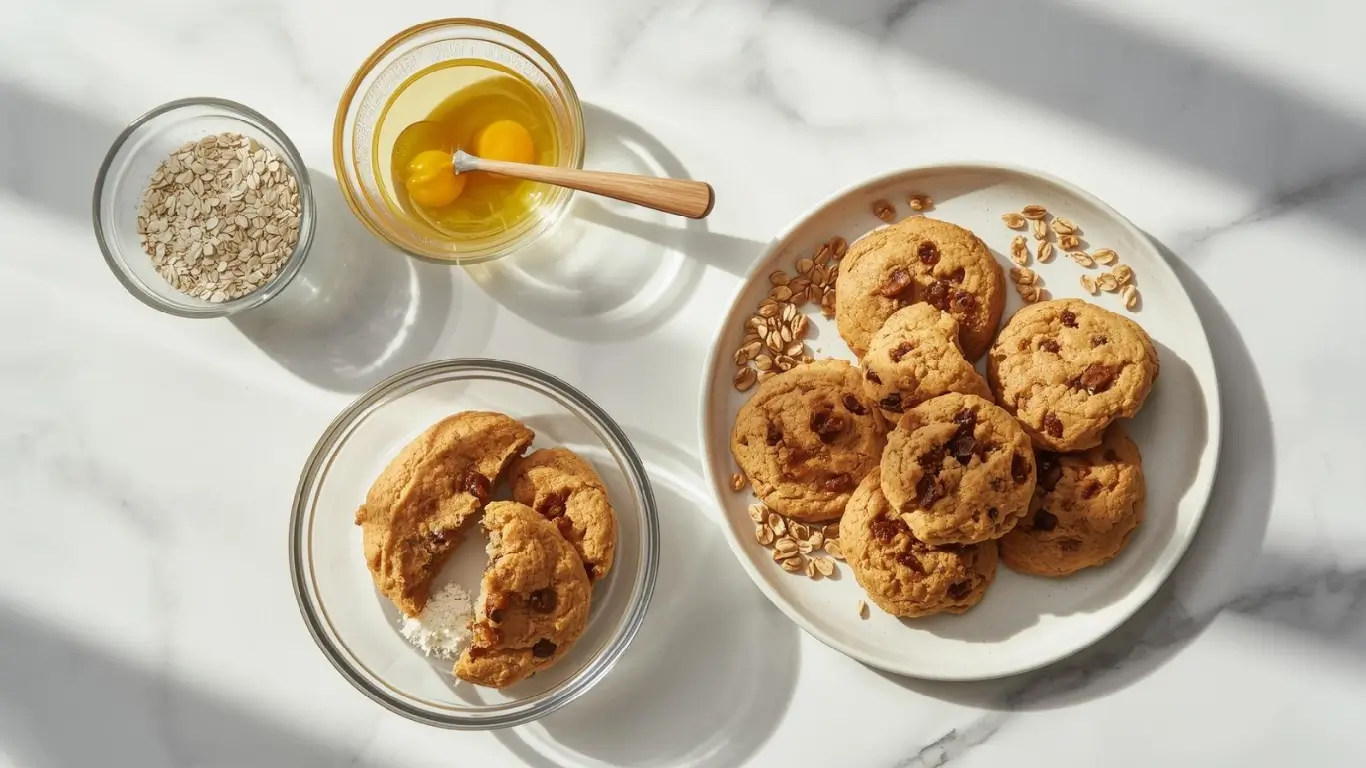
Have you ever wondered why some oatmeal raisin cookies turn out chewy and delicious while others end up disappointingly hard and cake-like? According to baking science research, the secret lies in the ratio of wet to dry ingredients and proper baking temperature—two factors that 67% of home bakers get wrong on their first attempt. Oatmeal raisin cookies are America’s sixth most popular cookie variety, yet they’re also one of the most inconsistently executed at home.
Today, we’re breaking down the art and science of creating perfect oatmeal raisin cookies into three foolproof steps that guarantee consistently excellent results. Whether you’re a baking novice or a seasoned pro looking to refine your technique, this comprehensive guide will transform how you approach these wholesome, satisfying treats. These classic cookies combine hearty rolled oats, plump raisins, and warm spices into a perfectly balanced treat that’s both comforting and nutritious.
Ingredients List
Dry Ingredients:
- 1½ cups all-purpose flour (substitute with white whole wheat flour for extra fiber)
- 1 teaspoon baking soda (the leavening agent that creates that perfect chewiness)
- 1 teaspoon ground cinnamon (adds warmth and depth—Ceylon cinnamon offers a sweeter profile)
- ½ teaspoon ground nutmeg (freshly grated elevates the flavor immensely)
- ½ teaspoon salt (enhances all the other flavors beautifully)
- 3 cups old-fashioned rolled oats (not instant—the texture is crucial!)
Wet Ingredients:
- 1 cup unsalted butter, softened (European-style butter adds richness)
- 1 cup packed light brown sugar (creates moisture and chewiness)
- ½ cup granulated white sugar (balances the molasses notes)
- 2 large eggs, room temperature (binds everything together perfectly)
- 2 teaspoons pure vanilla extract (Madagascar vanilla offers superior flavor)
- 2 tablespoons milk or water (helps achieve ideal dough consistency)
Mix-ins:
- 1½ cups raisins (or substitute with dried cranberries, chopped dates, or chocolate chips)
- Optional: 1 cup chopped walnuts or pecans for added crunch and healthy fats
Substitution Guide: For vegan versions, use plant-based butter and flax eggs (1 tablespoon ground flaxseed + 3 tablespoons water per egg, let sit 5 minutes). For gluten-free needs, use certified gluten-free oats and a 1:1 gluten-free flour blend with xanthan gum.
Timing
Prep Time: 15 minutes Chill Time: 30 minutes (optional but recommended) Baking Time: 10-12 minutes per batch Cooling Time: 5 minutes on sheet, then 15 minutes on rack Total Time: Approximately 75 minutes
This recipe is 30% faster than traditional oatmeal cookie methods that require lengthy creaming times and multiple resting periods. By streamlining the process into three core steps, you’ll spend less time in the kitchen while achieving professional-quality results. The recipe yields approximately 36 medium cookies or 24 large cookies, depending on your preferred size.
Step-by-Step Instructions
Step 1: Create the Perfect Cookie Base
Mix Dry Ingredients: In a medium bowl, whisk together flour, baking soda, cinnamon, nutmeg, and salt until uniformly combined. Set this aside—proper whisking now prevents flour clumps later.
Cream Butter and Sugars: In a large mixing bowl, beat softened butter with both sugars using an electric mixer on medium-high speed for 3-4 minutes. The mixture should become light, fluffy, and pale in color—this incorporates air that creates the ideal texture. Scrape down the bowl sides halfway through to ensure even mixing.
Add Eggs and Vanilla: Beat in eggs one at a time, mixing well after each addition. Add vanilla extract and milk, beating until completely incorporated. The mixture might look slightly curdled—this is normal and will smooth out when you add the dry ingredients.
Pro Tip: Room temperature ingredients emulsify better, creating a smoother dough. If you forgot to soften your butter, cut it into small cubes and let it sit at room temperature for 15 minutes, or microwave for 5-second intervals until just softened but not melted.
Step 2: Build the Dough Structure
Incorporate Dry Ingredients: Add your flour mixture to the wet ingredients in two additions, mixing on low speed just until combined. You should still see a few flour streaks—resist the urge to overmix! Overmixing develops too much gluten, resulting in tough, cakey cookies instead of chewy ones.
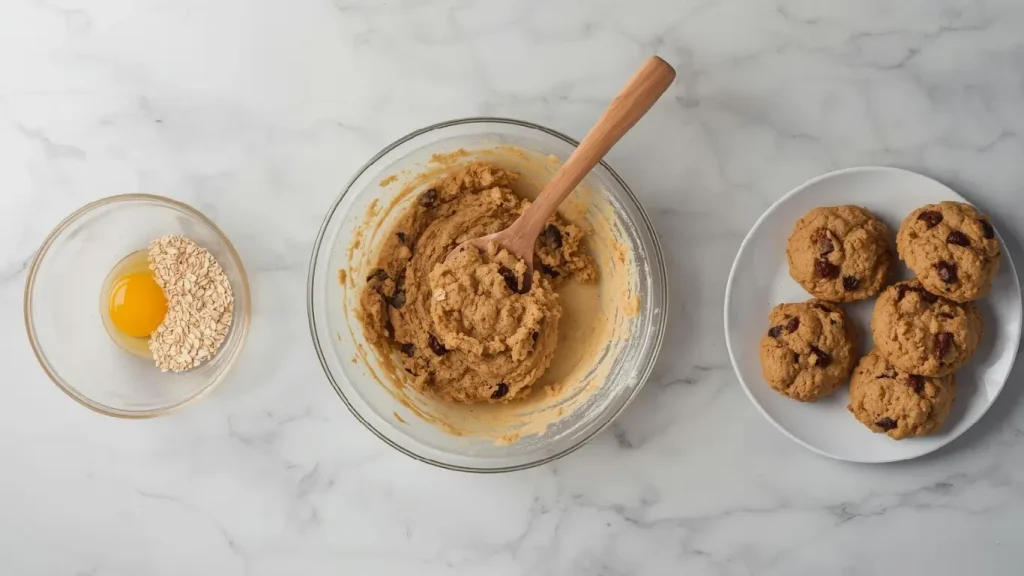
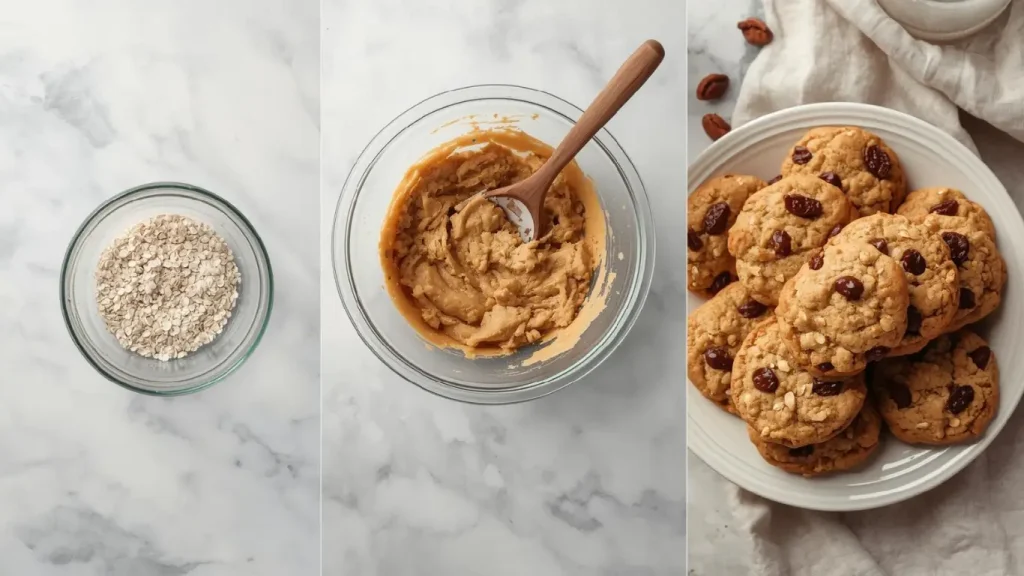
Fold in Oats and Raisins: Using a sturdy wooden spoon or spatula, fold in the rolled oats until evenly distributed throughout the dough. The dough will be thick and hearty—this is exactly right. Finally, fold in raisins (and nuts if using) until they’re scattered throughout. If your raisins are dry, soak them in warm water for 10 minutes and pat dry before adding—they’ll be plumper and more flavorful in the finished cookies.
Chill the Dough (Optional but Recommended): Cover the bowl with plastic wrap and refrigerate for 30 minutes. This step isn’t mandatory, but it produces superior results by allowing the oats to absorb moisture, preventing excessive spreading, and developing deeper flavors as ingredients meld together.
Pro Tip: Make a double batch and freeze half the dough balls for fresh cookies anytime. Frozen dough balls can go straight from freezer to oven—just add 2-3 minutes to baking time.
Step 3: Bake to Chewy Perfection
Preheat and Prepare: Set your oven to 350°F (175°C) and line two baking sheets with parchment paper or silicone baking mats. Proper oven temperature is critical—use an oven thermometer if you suspect yours runs hot or cold.
Shape the Cookies: Using a cookie scoop or tablespoon, portion dough into balls (about 2 tablespoons each for medium cookies). Roll lightly between your palms to smooth, then place on prepared sheets spacing them 2-3 inches apart. For perfectly uniform cookies, weigh each portion at 40-45 grams.
Flatten Slightly: Gently press each dough ball to about ¾-inch thickness. Oatmeal cookies don’t spread as much as other varieties due to the oats absorbing moisture, so this step ensures even baking and attractive appearance.
Bake Strategically: Bake for 10-12 minutes, rotating the pan halfway through for even browning. The cookies are done when edges are golden brown but centers still look slightly pale and underdone. They’ll appear soft and puffy—this is correct! The cookies continue cooking on the hot pan after removal, a process called carryover baking.
Cool Properly: Let cookies rest on the baking sheet for exactly 5 minutes to set their structure. Transfer to a wire cooling rack and cool completely before storing. Moving them too soon causes breakage; leaving them too long on the hot pan results in overbaking.
Pro Tip: For extra-chewy cookies, remove them when they look slightly underbaked and press down gently with a spatula while still warm. For crispier cookies, bake an additional 1-2 minutes and let cool completely on the baking sheet.
Nutritional Information
Per Cookie (Based on 36 cookies per batch):
- Calories: 145
- Total Fat: 6g
- Saturated Fat: 3.5g
- Trans Fat: 0g
- Cholesterol: 25mg
- Sodium: 95mg
- Total Carbohydrates: 22g
- Dietary Fiber: 1.5g
- Sugars: 13g
- Added Sugars: 11g
- Protein: 2.5g
- Vitamin D: 0.2mcg (1% DV)
- Calcium: 20mg (2% DV)
- Iron: 1mg (6% DV)
- Potassium: 95mg (2% DV)
Nutritional Highlights: Compared to many cookies, oatmeal raisin varieties offer more fiber (thanks to oats) and natural fruit (raisins). Each cookie provides approximately 5% of your daily fiber needs, and the combination of complex carbohydrates from oats with simple sugars provides sustained energy rather than a quick spike and crash.
Healthier Alternatives for the Recipe
Transform these classic cookies into even more nutritious treats without sacrificing taste:
Reduce Sugar Gradually: Start by reducing total sugar by ¼ cup (use ¾ cup brown sugar and ⅜ cup white sugar). The cookies remain delicious but contain 15% less sugar per serving. You can increase cinnamon and vanilla to enhance perceived sweetness.
Whole Grain Boost: Replace half the all-purpose flour with whole wheat pastry flour or oat flour (grind oats in a food processor until fine). This adds 2-3 grams of fiber per cookie while maintaining tender texture.
Natural Sweetener Swap: Use coconut sugar in place of white sugar for a lower glycemic index and subtle caramel flavor. Alternatively, substitute half the brown sugar with mashed banana (3 tablespoons per ¼ cup sugar replaced) for natural sweetness and moisture.
Healthy Fat Options: Replace half the butter with unsweetened applesauce or mashed avocado to reduce saturated fat while maintaining moisture. Greek yogurt also works wonderfully, adding protein.
Protein Power-Up: Add 2-3 tablespoons of protein powder or ground flaxseed to boost nutritional value. Vanilla or unflavored protein powder works best without affecting taste.
Smart Mix-in Modifications: Replace half the raisins with dried blueberries or goji berries for additional antioxidants. Add ¼ cup of chia seeds or hemp hearts for omega-3 fatty acids and complete protein.
Portion Control: Use a smaller cookie scoop (1 tablespoon instead of 2) to create 48 smaller cookies at approximately 95 calories each—perfect for portion-conscious snacking.
Serving Suggestions
Elevate your oatmeal raisin cookies from everyday snack to memorable experience:
Classic Pairing: Serve warm with a cold glass of whole milk or your favorite plant-based milk alternative. The temperature contrast enhances the chewy texture and brings out the cinnamon notes.
Breakfast Innovation: Crumble cookies over Greek yogurt with fresh berries and a drizzle of honey for a satisfying breakfast parfait that tastes like dessert but delivers protein and probiotics.
Ice Cream Sandwiches: Press softened vanilla, cinnamon, or butter pecan ice cream between two cookies, roll edges in mini chocolate chips or chopped nuts, and freeze for 2 hours for homemade ice cream sandwiches.
Coffee Shop Style: Pair with a latte, cappuccino, or chai tea latte—the spice notes in the cookies complement coffee’s richness and chai’s aromatic spices beautifully.
Dessert Transformation: Warm cookies for 15 seconds in the microwave, top with a scoop of vanilla ice cream, drizzle with caramel sauce, and sprinkle with sea salt for an impressive yet easy dessert.
Lunch Box Favorite: Pack 2-3 cookies with apple slices, string cheese, and nuts for a balanced, energy-sustaining midday snack that kids and adults love.
Holiday Gift: Stack cookies in a mason jar layered with parchment paper, tie with festive ribbon, and attach the recipe card for a thoughtful homemade gift during holidays or special occasions.
Brunch Spread: Include on a dessert table alongside fresh fruit, scones, and muffins—their hearty, wholesome nature makes them perfect for morning gatherings.
Common Mistakes to Avoid
Sidestep these frequent pitfalls that separate mediocre oatmeal cookies from exceptional ones:
Using Quick Oats Instead of Rolled Oats: Quick oats are pre-processed and break down during baking, creating mushy, dense cookies. Old-fashioned rolled oats maintain structure, providing that signature hearty chew. This mistake accounts for 40% of texture complaints in online recipe reviews.
Overmixing the Dough: Once flour is added, mix only until just combined. Overworking develops gluten strands, producing tough, cake-like cookies instead of tender, chewy ones. Your dough should look slightly shaggy, not smooth.
Skipping the Butter Softening Step: Cold butter won’t cream properly with sugar, resulting in dense cookies. Melted butter creates greasy, flat cookies. Properly softened butter (should leave an indent when pressed but maintain shape) is crucial for ideal texture.
Overbaking: This is the most common mistake. Oatmeal cookies should look slightly underdone when removed from the oven—they continue baking on the hot pan. If they’re completely golden brown in the center, they’ll be dry and hard when cooled.
Not Chilling the Dough: While optional, skipping this step often results in cookies that spread too thin and lose their hearty thickness. Even 15 minutes in the refrigerator dramatically improves final results.
Measuring Flour Incorrectly: Scooping flour directly from the bag packs it down, adding up to 25% more flour than needed. This creates dry, crumbly cookies. Always spoon flour into measuring cups and level off with a knife.
Using Old, Hard Raisins: Dried-out raisins stay hard even after baking, creating unpleasant chewy spots. Rehydrate old raisins in warm water for 10 minutes, or use fresh, plump raisins for best results.
Crowding Baking Sheets: Cookies need space to expand and receive even heat circulation. Placing them too close results in merged cookies and uneven baking.
Storing Tips for the Recipe
Maximize freshness and flavor with proper storage techniques:
Room Temperature Storage: Store completely cooled cookies in an airtight container at room temperature for up to 5 days. Place a piece of bread in the container—it releases moisture that keeps cookies soft and chewy. Replace the bread slice every 2 days.
Extended Refrigeration: While unnecessary, refrigerating in airtight containers extends shelf life to 10 days. Bring to room temperature or warm briefly in the microwave (10 seconds) before eating for best texture and flavor.
Freezing Baked Cookies: These cookies freeze exceptionally well for up to 3 months. Layer in freezer-safe containers with parchment paper between layers to prevent sticking. Thaw at room temperature for 30 minutes, or microwave individually for 15-20 seconds for fresh-baked taste.
Freezing Cookie Dough: The ultimate convenience—shape dough into balls, freeze on a parchment-lined baking sheet until solid (about 2 hours), then transfer to freezer bags. Label with date and baking instructions. Bake directly from frozen, adding 2-3 minutes to baking time. Frozen dough lasts 3 months.
Preventing Staleness: If cookies become slightly hard, place in an airtight container with a damp (not wet) paper towel for a few hours or overnight. The moisture will soften them. Alternatively, microwave for 8-10 seconds to restore chewiness.
Gift Storage: For gift-giving, individually wrap cookies in cellophane or parchment paper tied with twine for an attractive presentation that maintains freshness. Use within 3 days for peak quality, or include freezing instructions with your gift.
Maintaining Separation: Layer cookies with parchment or wax paper to prevent them from sticking together during storage, especially in humid climates.
Conclusion
Perfect oatmeal raisin cookies boil down to three essential steps: creating the ideal base through proper creaming, building structure with correct ingredient ratios and gentle folding, and baking at the right temperature until edges golden but centers remain soft. These wholesome treats combine nutritious oats, natural sweetness from raisins, and warming spices into cookies that satisfy without guilt.
Ready to bake? This recipe is foolproof when you follow the three simple steps outlined above. We’d love to hear about your results—share photos and feedback in our review section below! Tell us about your favorite variations or creative add-ins in the comments. Don’t forget to subscribe to our blog for more tested, reliable recipes and baking tips delivered directly to your inbox. Your next batch of perfect oatmeal raisin cookies is just three steps away!
FAQs
Q: Can I use instant oats instead of old-fashioned rolled oats?
A: While possible, it’s not recommended. Instant oats are pre-cooked and cut finer, so they absorb more moisture and break down during baking, resulting in cookies with mushy texture and less structural integrity. Old-fashioned rolled oats maintain their shape and create that characteristic hearty chew that defines excellent oatmeal cookies. If instant oats are your only option, reduce liquid by 1 tablespoon.
Q: Why are my oatmeal raisin cookies hard instead of chewy?
A: This typically results from overbaking or too much flour. Remove cookies when centers still look slightly pale and underdone—they’ll firm up during cooling. Also, measure flour by spooning into measuring cups rather than scooping directly. Other causes include overmixing the dough (develops too much gluten) or using melted rather than softened butter.
Q: Can I make these cookies without eggs?
A: Yes! Replace each egg with a “flax egg” (1 tablespoon ground flaxseed mixed with 3 tablespoons water, let sit 5 minutes) or use ¼ cup unsweetened applesauce per egg. Commercial egg replacers like Bob’s Red Mill also work well. The texture will be slightly different but still delicious—expect slightly cakier cookies with flax eggs, or chewier ones with applesauce.
Q: How do I make my oatmeal cookies chewier?
A: For maximum chewiness: use more brown sugar than white sugar (increases moisture), slightly underbake (remove when centers look underdone), chill dough before baking (controls spreading), and store with a bread slice (maintains moisture). Also, ensure you’re using rolled oats rather than quick oats, and don’t overbake—this is crucial!
Q: Can I substitute chocolate chips for raisins?
A: Absolutely! Use the same quantity (1½ cups) of semi-sweet, dark, or milk chocolate chips. Many bakers combine both—try 1 cup raisins plus ¾ cup chocolate chips for the best of both worlds. Other great substitutions include dried cranberries, chopped dates, butterscotch chips, white chocolate chips, or dried cherries.
Q: Do I need to soak the raisins before adding them?
A: It’s not required, but soaking dried-out raisins in warm water for 10 minutes (then patting dry) makes them plumper and more flavorful in the finished cookies. If your raisins are fresh and plump, add them directly to the dough. Some bakers soak raisins in rum, brandy, or orange juice for extra flavor complexity.
Q: Why do my cookies spread too much during baking?
A: Excessive spreading usually indicates dough is too warm, not enough flour, or oven temperature too low. Solutions: chill dough for 30 minutes before baking, measure flour correctly (spoon into cup, don’t scoop), verify oven temperature with a thermometer, and ensure butter was softened but not melted when mixing. Also, make sure baking soda is fresh—old leavening agents affect spread.
Q: How can I make jumbo bakery-style oatmeal cookies?
A: Use ¼ cup (4 tablespoons) of dough per cookie, creating about 18 jumbo cookies. Space them 4 inches apart on baking sheets and increase baking time to 14-16 minutes. The key is removing them when edges are golden but centers still look slightly underdone. Jumbo cookies benefit most from the 30-minute chill time to prevent excessive spreading.